Drought Tolerant Landscaping Ideas for Low-Maintenance Yard
Table of Contents
A lawn that turns brown during a dry summer or a garden that constantly needs watering can make yard maintenance feel like a never-ending task. A drought tolerant landscaping offers another approach: choosing plants and landscape features that are better suited to the local climate, grouping plants according to their water needs, improving the soil, and using water more efficiently.
The goal is not necessarily to create a desert-style yard filled with gravel. A well-planned drought tolerant landscape can still include flowers, shrubs, trees, ground covers, and attractive outdoor spaces while reducing unnecessary watering.
What Is Drought-Tolerant Landscaping, and How Is It Different From Xeriscaping?
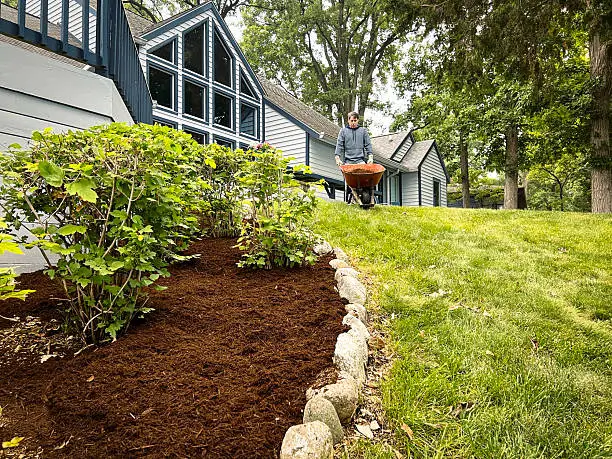
Drought tolerant landscaping is a landscape designed around plants and practices that can perform well with limited supplemental water once they are properly established. Xeriscaping is a broader landscape-design approach centered on water conservation, it doesn’t simply mean replacing a lawn with rocks, but rather building the whole design around careful soil preparation, thoughtful plant selection, and efficient watering strategies, an approach Oregon State University’s Extension Service lays out for home gardeners.
A drought tolerant yard can therefore look very different depending on where you live. One landscape might use flowering perennials and ornamental grasses, while another might use shrubs, trees, gravel paths, and ground covers. The important point is to match the landscape to its environment rather than trying to make every yard look the same.
What Should You Know Before Planning a Drought-Tolerant Yard?
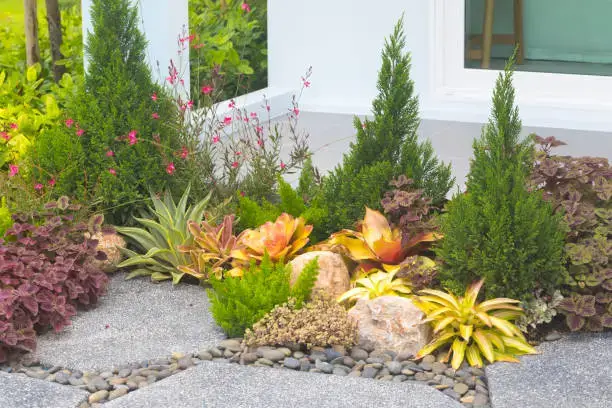
Before buying plants or removing your lawn, look at the conditions already present in your yard. A plant described as drought tolerant can still struggle if it is planted in the wrong soil, receives unsuitable sunlight, or cannot tolerate the local winter temperatures.
Check Your Climate and Growing Conditions
Start by checking your USDA Plant Hardiness Zone, which the USDA explains is based on the average annual extreme minimum winter temperature at a given location, and serves as the standard reference gardeners use to judge which perennial plants are likely to survive there.
However, the hardiness zone is only one piece of the puzzle. It does not tell you how much water a plant needs. Also consider: average rainfall and seasonal dry periods, summer temperatures, humidity, wind exposure, sun and shade, soil drainage, slope and runoff, and existing irrigation. Two homes in the same USDA zone can still have very different growing conditions.
Understand Your Soil
Soil affects how quickly water moves through the ground and how much moisture remains available to plant roots. Sandy soils generally drain quickly and hold less water, while heavy clay soils can drain poorly and contain less oxygen around the roots. A simple way to check which you have: dig a hole, fill it with water, and see how long it takes to drain, fast drainage suits drought tolerant plants naturally, while slow drainage means you’ll need to choose species that tolerate wetter roots or improve the soil first.
Before changing your landscape, pay attention to areas where water disappears quickly and areas where it tends to collect after rain or irrigation. This can help you choose plants that are better suited to each part of the yard instead of trying to force the same plants to grow everywhere.
Pay Attention to Sun and Shade
Observe your yard throughout the day. A planting area that receives six or more hours of direct sunlight can have very different water and temperature conditions from a shaded area beside a house or underneath mature trees. When selecting plants, check their recommended light requirements as well as their water needs.
Check HOA and Local Rules
If your property is part of a homeowners association, review the current landscaping rules before removing a lawn or installing major hardscape. Rules can vary between communities, so check your own HOA documents rather than assuming that a particular landscaping change will automatically be permitted.
What Are the Best Plants for a Drought-Tolerant Landscape?
There is no single list of drought tolerant plants that works equally well across the entire United States. The best choices are plants that can tolerate the combination of climate, soil, sunlight, and water availability in your specific location. Instead of searching only for a plant labeled “drought tolerant,” look for information from your state university Extension service, local botanical garden, or other regional horticultural authority.
Are Native Plants Always the Best Choice?
Native plants can be excellent choices, but native does not automatically mean drought tolerant, some native species naturally come from wetter parts of their region and may not perform well under dry conditions. Plant selection should consider the plant’s natural environment alongside the actual conditions in your own landscape.
Native plants also provide benefits beyond water use, including habitat and food for local wildlife and pollinators. But for a drought tolerant landscape, the most important question is whether the particular plant is suited to your site’s conditions.
Think Regionally When Choosing Plants
Plant recommendations should be specific to your region, and this is where a national list falls short. A plant palette built for a cooler, wetter climate looks nothing like one built for the desert Southwest, University of Arizona Cooperative Extension notes that even properly chosen drought-tolerant plants still need regular irrigation for their first couple of years before they can be weaned down to rely mainly on natural rainfall, and the specific species recommended for that establishment period are highly local. Copying a “best drought-tolerant plants” list written for one region and applying it to another is one of the fastest ways to lose new plantings.
Which Ground Covers Can Replace a Traditional Lawn?
If your goal is to reduce the amount of lawn, ground covers can be worth considering. However, there is no universal lawn replacement that works everywhere. Some ground covers tolerate dry conditions better than others, while some are better suited to shade, foot traffic, or specific soil types.
Low, spreading plants like sedum and ornamental grasses tend to work well in cooler, wetter climates, while low groundcovers native to hot, arid regions tend to hold up better under intense, direct sun.
Before replacing a lawn, ask: How much foot traffic will the area receive? Is the location sunny or shaded? How quickly does the soil drain? Does the ground cover tolerate your local climate? How quickly does it spread? Will it require regular trimming or irrigation? A ground cover that requires less mowing but still needs frequent irrigation may not provide the water savings you expected.
How Do You Design and Install a Drought-Tolerant Landscape?
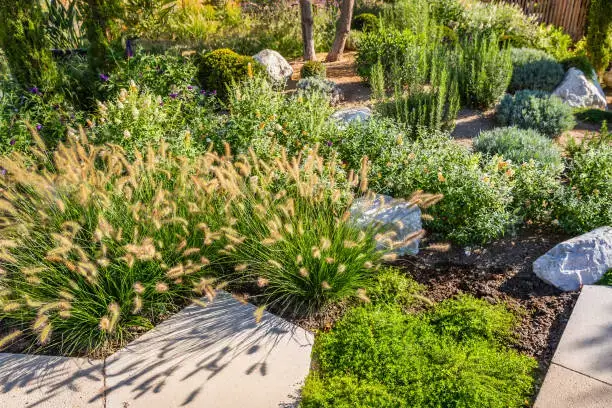
A successful drought tolerant yard is usually easier to manage when you plan the landscape before planting.
1. Assess the Existing Yard
Walk around the property and identify full-sun areas, partial-shade areas, deep shade, dry spots, areas where water collects, existing trees and shrubs, irrigation zones, and sections of lawn you actually use. You may discover that only part of the lawn needs to be replaced.
2. Group Plants by Water Needs
One of the most useful principles in water-wise landscaping is hydrozoning: grouping plants with similar water requirements together so that one irrigation zone does not try to satisfy plants with completely different needs. A lawn, for instance, should generally not share the same irrigation zone as a group of established plants that needs much less supplemental water.
3. Adjust Your Irrigation
Changing the plants without changing the irrigation system can limit the benefits of a water-wise landscape. Check whether sprinklers are watering sidewalks, driveways, or other areas that do not need irrigation. Where appropriate, efficient irrigation methods such as drip or micro-irrigation can help deliver water closer to plant root zones. The exact irrigation method should depend on the plants, soil, slope, and layout of the landscape.
4. Use Mulch Properly
Mulch can help reduce evaporation from the soil surface and suppress weeds. A layer of a few inches in landscape beds is typically enough during drought conditions. Keep mulch away from direct contact with tree trunks and avoid creating excessively deep piles.
5. Give New Plants Time to Establish
A common mistake is assuming that a newly planted drought tolerant plant needs almost no water. New plants still need adequate moisture while they develop their root systems, and how long that takes varies by region and by plant, anywhere from about two growing seasons to a few years. Follow the establishment recommendations for the specific plant and your local climate rather than assuming one timeline applies everywhere.
What Mistakes Should You Avoid?
Choosing plants only because they are labeled “drought tolerant.” A drought tolerant plant can still fail if it is poorly matched to the soil, sunlight, temperature, or drainage of the planting site.
Assuming native means low-water. Native plants are adapted to their local ecosystems, but not every native plant comes from a dry environment. Choose plants according to their actual growing conditions rather than the word “native” alone.
Treating the entire yard the same. A sunny slope, shaded side yard, lawn, and planting bed may have very different water requirements. Hydrozoning can make irrigation more efficient by grouping plants with similar needs.
Removing the lawn without a plan. Replacing grass with random plants can create a different maintenance problem rather than solving the original one. Plan pathways, planting areas, irrigation, mulch, and the intended use of the yard before removing large sections of lawn.
Overwatering new plants. Drought tolerant does not mean “never water.” Newly planted vegetation needs enough moisture to establish healthy roots, and watering can typically be scaled back as plants establish.
Ignoring signs of water stress. Wilting, curling leaves, and poor growth can indicate a plant is stressed. Check soil moisture directly before deciding whether additional watering is needed, rather than watering on a fixed schedule out of habit.
How Much Does It Cost to Convert a Yard to Drought-Tolerant Landscaping?
There is no single national price that accurately represents a drought tolerant landscape conversion. A small DIY project may mainly involve plants, mulch, soil amendments when appropriate, and a way to water plants during establishment. A larger renovation can involve lawn removal, irrigation modifications, grading, hardscape, mature trees or shrubs, and professional labor.
Instead of relying on a generic national price range, build your budget around the actual work your yard needs. Divide your project into: plant material, mulch, soil preparation, irrigation changes, lawn removal, pathways or hardscape, and professional design or installation if needed. You can also complete the project in stages rather than replacing the entire landscape at once.
Drought-Tolerant Landscaping vs. Traditional Lawn: Which Makes More Sense for Your Yard?
The answer depends on how you use your yard, your climate, and how much maintenance you are willing to provide.
| Factor | Drought-Tolerant Landscape | Traditional Lawn |
|---|---|---|
| Water needs | Can be lower when plants are well matched to the site | Often requires regular irrigation in dry climates |
| Mowing | Usually reduced | Regular mowing is required |
| Plant diversity | Can include trees, shrubs, flowers and ground covers | Usually dominated by turfgrass |
| Appearance | Can vary widely by region and design | More uniform |
| Maintenance | Depends on plant selection and design | Mowing, edging, fertilizing and watering may be required |
| Best use | Naturalized beds, borders, outdoor living areas and low-water zones | Play areas, recreation and traditional open lawn spaces |
A drought tolerant landscape does not have to eliminate lawn completely. For many homeowners, a practical approach is to keep a smaller lawn where it is genuinely useful and convert less-used sections into planted beds or other low-water areas.
Can Drought-Tolerant Landscaping Affect Home Value or HOA Approval?
There is no universal guarantee that replacing a lawn with drought-tolerant landscaping will increase a home’s resale value. The effect can depend on the local housing market, neighborhood expectations, landscape quality, maintenance, and buyer preferences.
What is more certain is that a well-designed landscape should still look intentional and cared for. If you are considering a major change, check HOA requirements and any local water-use rules that apply to your property before beginning the project.
A Simple Way to Start
You do not have to redesign the entire yard at once. A simple starting plan:
- Choose one section of lawn that is rarely used.
- Observe the area for several days and note sunlight, shade, drainage, and existing irrigation.
- Check your USDA hardiness zone and look for plant recommendations from a local Extension service.
- Choose plants with similar water and sunlight requirements.
- Group them into the appropriate hydrozone.
- Improve the planting area if necessary and add mulch.
- Adjust irrigation and monitor the new plants while they establish.
This approach lets you learn how the landscape behaves before investing in a complete yard renovation.
Final Thoughts
A successful drought-tolerant landscape is less about filling a yard with “low-water plants” and more about making a series of decisions that work together. Choose plants suited to your climate and soil, group them according to their water needs, use irrigation efficiently, protect the soil with appropriate mulch, and give new plants enough water to establish. With that approach, you can create a landscape that is attractive, practical, and easier to maintain, without assuming that every drought-tolerant yard has to look the same.
Is drought-tolerant landscaping completely maintenance-free?
No. It can reduce certain maintenance and watering requirements, but plants still need care — establishment watering for new plants, and pruning, weeding, seasonal cleanup, and occasional irrigation for mature landscapes.
Do drought-tolerant plants need water?
Yes. They’re not plants that survive without water, they’re plants that can tolerate periods of limited water once appropriately established and matched to suitable growing conditions.