Balcony Garden Ideas for Small Spaces That Actually Thrive
Table of Contents
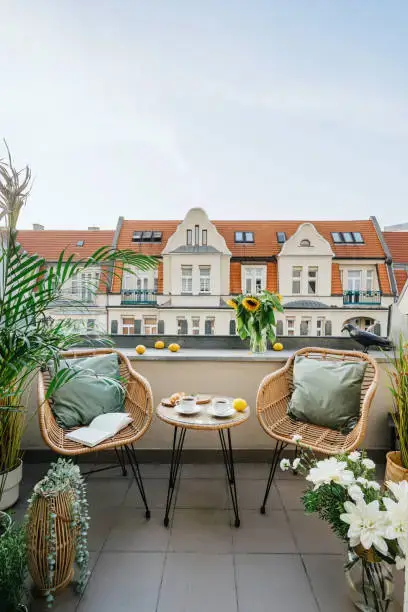
A balcony garden might seem like a simple affair until the wind knocks over your basil plant, the midday sun scorches the lettuce leaves, and you discover that the weight of your planters exceeds the limit set in your lease agreement. The good news, however, is that with the right choice of containers and plants and a well-planned layout even a cramped apartment balcony can yield real harvests and burst with vibrant color, rather than just hosting a few pathetic, withered succulents.
What Makes a Balcony Different From a Regular Garden?
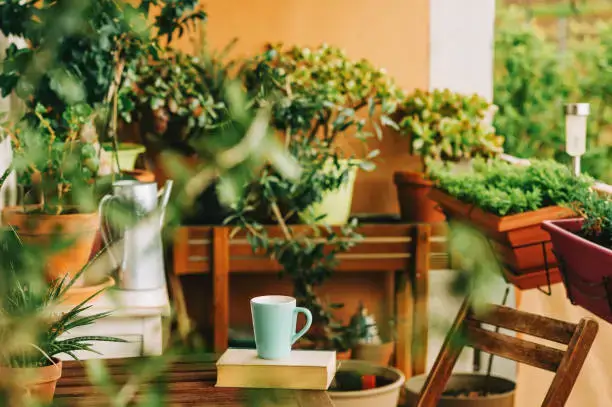
Growing conditions on a balcony differ significantly from those in ground-level garden beds, and these differences dictate most of the decisions you will make. Sunlight exposure on a balcony depends not only on orientation but is also influenced by light reflecting off walls, glass doors, and metal railings factors that can raise temperatures well above the ambient air temperature. Consequently, a south-facing balcony backed by a white wall may be hotter than an open garden bed exposed to direct sunlight.
Wind is another key factor whose impact is often overlooked. As University of Illinois Extension notes, strong wind can desiccate large-leafed plants and dry out potting media faster than in ground-level beds, and dark-colored containers compound the problem by absorbing extra heat, which stresses roots and speeds up moisture loss even further.
Before buying a single pot, check:
- Weight limits: most residential balconies are rated for 50-100 lbs per square foot, but older buildings can be lower
- HOA or lease restrictions: some buildings ban anything visible from the street, hanging items over railings, or drainage water dripping onto neighbors below
- Available space: measure floor footprint and railing length separately, since they’re used differently
How Much Sunlight Does a Balcony Garden Need?
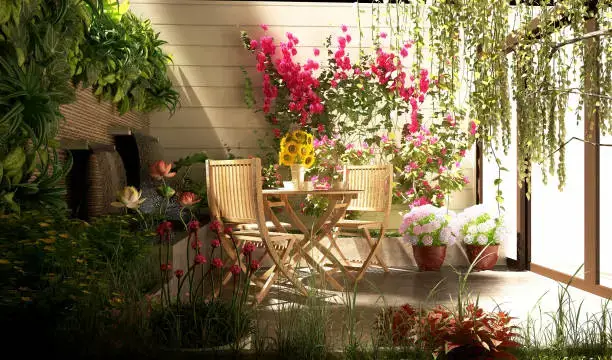
UC ANR’s Master Gardener guidelines recommend at least 6 hours of direct sunlight daily for most fruiting vegetables, while shade-loving plants can make do with 3-4 hours of filtered light or morning sun. Crops that require full sun such as tomatoes and peppers will not produce abundant yields on a balcony that receives sunlight only in the morning and is shaded in the afternoon.
To find out what you’re actually working with, track your balcony’s light for a few days:
- Check it every hour from morning to evening
- Note when direct sun hits vs. when it’s shaded by the building or railing
- Add up total hours of direct light
Compass direction gives you a rough starting point, but don’t skip the manual check reflected light and neighboring buildings change things a lot:
- South-facing: usually the most sun, best for fruiting vegetables
- West-facing: intense afternoon heat, good for heat-tolerant plants
- East-facing: gentler morning sun, good for leafy greens
- North-facing: mostly shade, best for ferns, hostas, and shade-tolerant herbs
What Are the Best Containers for a Small Balcony?
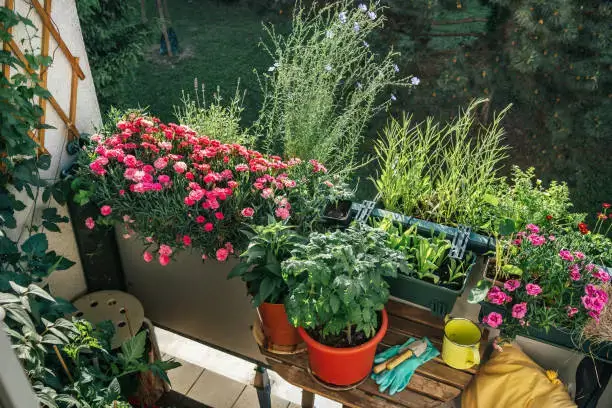
The best balcony planters strike an ideal balance between weight, drainage, and moisture retention, as no single material offers all three benefits simultaneously. Lightweight plastic and resin pots are the best choice regarding weight limits and retain moisture well, though they tend to degrade faster in direct sunlight. Fabric grow bags are even lighter and offer excellent drainage reducing the risk of root rot and can be folded flat for storage; however, they dry out more quickly and require more frequent watering. Glazed ceramic pots are attractive and retain moisture effectively, but their heavy weight can be a genuine concern if you are nearing your balcony’s weight limit.
Drainage matters more on a balcony than almost anywhere else. Without it, water pools, roots rot, and on an upper floor, overflow can leak onto the balcony below. Always use containers with drainage holes and a saucer, or drill holes into decorative pots that lack them.
Self-watering containers (with a built-in water reservoir) reduce watering frequency and are worth considering for windy or hot balconies, though they cost more upfront and aren’t ideal for plants that prefer to dry out between waterings, like rosemary.
To maximize a small footprint, look at:
- Railing planters that clip onto the balcony rail
- Hanging baskets for trailing plants like petunias or strawberries
- Tiered plant stands that stack pots vertically
- Wall-mounted pocket planters for herbs
How Do You Choose the Right Plants for a Balcony Garden?
Which Vegetables Grow Well in Small Containers?
Dwarf and compact varieties are bred specifically for container life and outperform standard varieties in tight spaces. Good options include:
- Tomatoes: ‘Patio’, ‘Tumbling Tom’, ‘Tiny Tim’ — compact, high-yield
- Peppers: most sweet and hot pepper varieties do well in 3-5 gallon pots
- Lettuce & leafy greens: shallow-rooted, good for railing planters
- Bush beans: compact varieties don’t need trellising
- Herbs: basil, thyme, chives, and mint all thrive in containers (keep mint contained , it spreads aggressively)
Container depth needs to match the plant’s root system. Per guidelines from Purdue University’s Cooperative Extension Service, a minimum depth of 10 to 12 inches is recommended for most plants exposed to drying wind and sun , leafy greens and herbs can get by on the lower end, while bush beans, peppers, and tomatoes need more room, with tomatoes requiring a container of at least 5 gallons.
Which Flowers and Ornamentals Thrive in Balcony Conditions?
For balconies exposed to intense heat and direct sunlight, Lantana, Zinnia, and Portulaca (moss rose) are excellent choices, as they tolerate high temperatures and irregular watering better than most seasonal ornamental flowers. For windier balconies, it is preferable to select shorter, sturdier plants; Marigolds, Geraniums, and dwarf Dahlias hold up better than tall, top-heavy flowers like sunflowers.
Annuals give you more color per season but need replanting yearly; perennials like sedum or dwarf ornamental grasses cost more upfront but come back year after year with far less maintenance a better fit if you don’t want to replant every spring.
How Do You Set Up a Balcony Garden Step by Step?
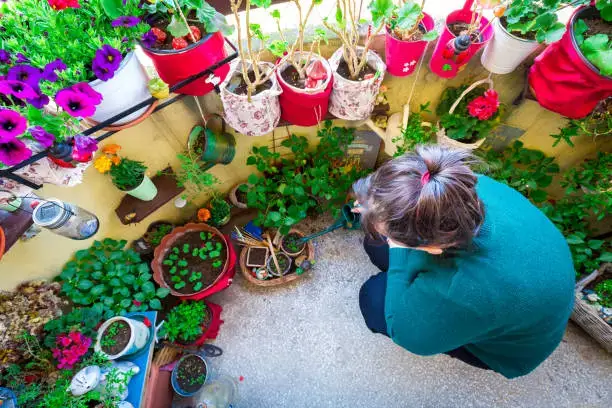
- Assess your balcony : track sunlight hours, note wind exposure, and confirm your building’s weight limit and any lease restrictions.
- Choose containers and drainage : pick materials suited to your weight limit and confirm every pot has drainage holes plus a saucer.
- Select a growing medium : use a potting mix made for containers, never garden soil, which compacts in pots and drains poorly.
- Plan your layout : combine floor containers, railing planters, and vertical or hanging options to use all available space, not just the floor.
- Set up a watering and fertilizing routine : container plants dry out faster than garden beds and need more frequent feeding since nutrients wash out with each watering.
What Mistakes Do Beginners Make With Balcony Gardens?
- Using garden soil instead of potting mix : it compacts, drains poorly, and can introduce pests
- Overcrowding containers : plants compete for water and nutrients, stunting growth
- Ignoring weight limits : a full row of ceramic pots with wet soil adds up fast
- Underwatering in wind and heat : balcony containers can need daily watering in summer, especially in fabric bags
- Poor drainage : according to Iowa State University Extension, root rot from overly wet, poorly drained soil is one of the most common causes of container plant failure
How Much Does It Cost to Start a Balcony Garden?
Budget tier ($30-60): basic plastic containers, a bag of potting mix, and seeds or starter plants , enough for a handful of pots.
Mid-range tier ($75-150): self-watering containers, a small trellis or railing planters, and higher-quality potting mix with slow-release fertilizer.
Higher-end tier ($200+): raised planter systems, drip irrigation add-ons, and decorative containers built to last multiple seasons.
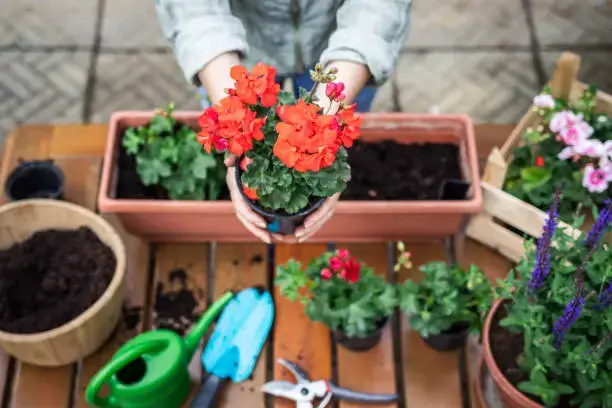
Ongoing costs are modest but real: expect to spend on fertilizer, seasonal replanting for annuals, and basic tools (hand trowel, pruning shears, watering can) over time.
Vertical Gardening vs. Traditional Containers — Which Is Better for Small Balconies?
Vertical systems (wall planters, tiered stands, trellises) win on space efficiency, letting you grow far more in the same floor footprint , a real advantage on a narrow balcony. Traditional floor containers are usually cheaper to start and easier to maintain, since watering and soil checks don’t require reaching or climbing.
Vertical setups generally need more frequent watering, since upper tiers dry out faster and can shade lower plants. The best approach for most small balconies is a mix: floor containers for larger plants like tomatoes, vertical or railing space for herbs and trailing flowers.
How Do You Balcony Garden in Extreme Climates?
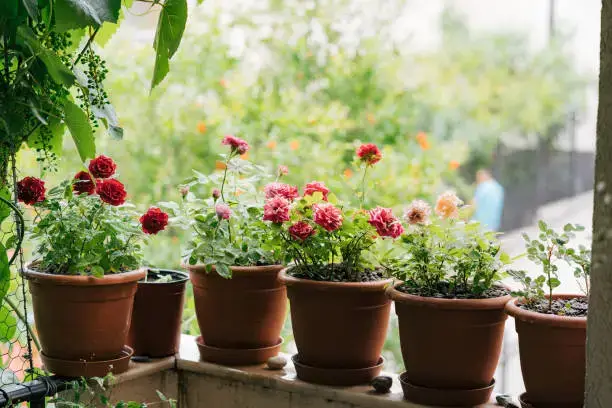
Most balcony gardening advice assumes a mild, generic climate , but hot southern balconies and cold northern ones need very different strategies.
In hot southern climates (Texas, Arizona, Florida), afternoon sun reflected off walls can push container temperatures high enough to stress roots even in heat-tolerant plants. Move pots to catch morning sun and afternoon shade where possible, use light-colored containers that reflect rather than absorb heat, and mulch the soil surface to slow moisture loss.
In colder climates, containers freeze faster than ground soil since roots are exposed on all sides. Move pots against a wall for insulation, cluster them together, or move them indoors before hard freezes. Perennials in containers are far more vulnerable to winter kill than the same plant in the ground.
Microclimates matter too , buildings close together create wind tunnels that dry out containers fast, while reflected heat off glass or metal railings can scorch plants that would otherwise tolerate full sun just fine.
Start small. A few well-chosen pots that actually thrive will teach you more than a crowded balcony that struggles all season , and you can always expand once you know what your specific space can handle.
Can you have a balcony garden without direct sunlight?
Yes, though your plant choices narrow significantly. Shade-tolerant herbs (mint, parsley, chives), leafy greens, and shade-loving ornamentals like ferns and hostas can do well with 3-4 hours of indirect or filtered light.
Do balcony gardens attract pests or wildlife?
They can attract common pests like aphids and spider mites, plus birds and squirrels depending on location and floor level. Regular inspection and removing standing water helps keep most issues manageable.
How do you protect a balcony garden from strong wind?
Use heavier, lower-profile containers, cluster pots together for mutual wind protection, and consider a mesh windscreen on the exposed side of the balcony for particularly wind-heavy spots.
Is a balcony garden allowed in rented apartments?
It depends on your lease and building rules , some restrict weight, hanging planters, or anything visible from the street. Always check your lease or ask your landlord before installing anything permanent.