Kitchen Cabinet Organization Ideas for a Small Kitchen
Table of Contents
Most small kitchens don’t need more cabinets. They need the shelves they already have to work harder: closing the gaps between shelves, bringing back-of-cabinet items forward, and giving every category a home.
This guide covers eight organizers that fit small kitchens, how to measure before you buy, where food and cleaning products belong, and which purchases are worth making first. Most of it works in a rental too.
Why Are Small Kitchen Cabinets So Hard to Organize?
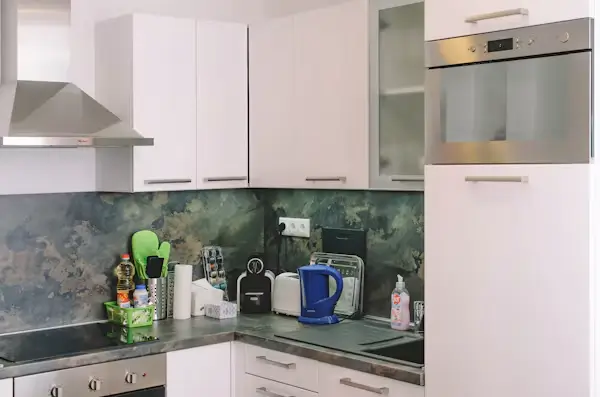
- Wasted vertical space: Tall cabinets often have big gaps above the dishes.
- Deep cabinets: Items pushed to the back disappear.
- Corners: Corner cabinets hide a lot of storage you can’t reach.
- Crowded shelves: Cookware, containers, and pantry food compete for the same space.
- Mixed categories: When everything lives together, nothing is quick to find.
Figure out which of these is your real problem before you buy anything. The best organizer depends on your cabinet and what you store in it.
What Should You Do Before You Buy Any Organizers?
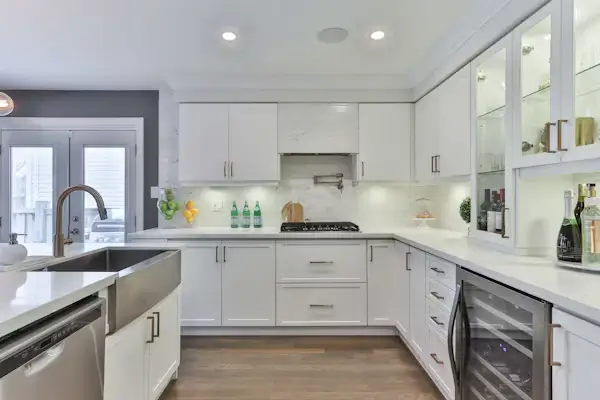
Empty one cabinet at a time. Wipe the shelves and check for moisture, damage, or loose hardware. Working cabinet by cabinet keeps your kitchen usable.
Sort by category. Group dishes, mugs, cookware, food containers and lids, dry goods, small appliances, and cleaning products. Set aside duplicates and broken items, but keep seasonal things you only use occasionally.
Measure before you shop. Record the inside width, depth, and height of each cabinet, plus the opening and any hinges that could get in the way. An organizer that fits inside can still be too wide to pass through the door opening. If you rent, check your lease before using anything that needs screws. The same measure-first, renter-friendly approach works for organizing a small closet on a budget.
What Are the Best Kitchen Cabinet Organization Ideas for a Small Kitchen?
1. Shelf risers for plates, bowls, and mugs. A riser adds a second level where the gap above your dishes goes unused, so smaller dishes sit on top and larger ones underneath. Check that it sits firmly and that your everyday items are still easy to lift out. Cost level: $.
2. Pull-out baskets and sliding shelves. These bring the back of a deep cabinet to you, which suits pantry packages, pots, and food containers. Some are freestanding and some need installing, so check the dimensions and load rating. Cost level: $$.
3. Cabinet door racks and hooks. The inside of a door can hold spice jars, packets, or light utensils. Check the space between the door and the shelves so it still closes, and choose over-the-door or removable styles in a rental. Cost level: $.
4. Lazy Susan for corner cabinets. A rotating tray turns jars and condiments toward you instead of making you reach. It only works if it spins freely inside your cabinet, so check the shape and opening first. Cost level: $.
5. Under-sink organizer. A two-tier or sliding unit built to work around pipes turns the messiest cabinet in the kitchen into usable storage. Keep it for cleaning supplies and add a safety latch, because food shouldn’t live there (more on that below). Check for leaks and dampness before you put anything in. Cost level: $ to $$.
6. Drawer dividers. If a drawer is a jumble of utensils, dividers give each type a slot and make it much easier to find what you need. Cost level: $.
7. Vertical rack for lids, sheet pans, and cutting boards. Standing flat items upright frees an entire shelf, as long as the rack keeps them stable. Cost level: $.
8. Clear bins and tiered spice shelves. Clear, labeled bins corral loose packets and snacks, and a tiered shelf lets you see every spice at once. Cost level: $.
Which Organizer Solves Which Problem?
| Problem | Try this | Cost level |
|---|---|---|
| Dishes stacked too high to reach | Shelf risers | $ |
| Items lost at the back of deep cabinets | Pull-out baskets | $$ |
| Unused space inside cabinet doors | Door racks | $ |
| Unreachable corner cabinet | Lazy Susan | $ |
| Cluttered space around pipes | Under-sink organizer | $ to $$ |
| Messy utensil drawer | Drawer dividers | $ |
| Loose lids and baking sheets | Vertical rack | $ |
How Do You Organize Small Kitchen Cabinets Step by Step?
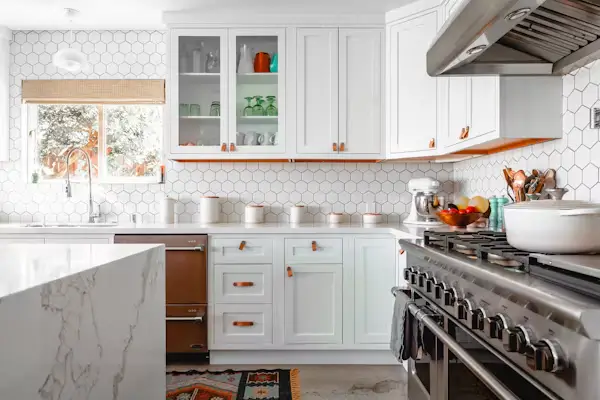
- Clean and dry the shelves. Fix any loose supports or damp spots before putting anything back.
- Create zones. Put frequently used pots, pans, and utensils near the stove, everyday dishes and glasses near the sink and dishwasher, and lightweight items in upper cabinets. Heavier cookware belongs low, where you can lift it safely.
- Use vertical space. Add risers where there’s clearance, and stand flat items upright in a rack.
- Front-load deep cabinets. Everyday items go at the front, and rarely used ones go to the back or a higher shelf.
- Label where it helps. Labels are most useful on pantry bins and baskets.
- Reset every few weeks. A quick check keeps clutter from creeping back.
Where Should Food and Cleaning Products Go?
Food and cleaners shouldn’t share a cabinet, and a few spots in a small kitchen are riskier than they look.
Food: USDA’s Food Safety and Inspection Service advises storing shelf-stable foods in a cool, dry place and never above or beside the stove or under the sink, and says temperatures below 85°F are best. It also suggests checking your pantry every few weeks and using older items first.
Cleaning products: Nemours KidsHealth recommends storing cleaning products in a high cabinet far out of reach, using safety latches on every cabinet that holds them, and keeping them in their original bottles. In a small kitchen, that usually means a latched under-sink cabinet or a high shelf.
If something goes wrong: Poison Control offers free, confidential help online or by phone at 1-800-222-1222, 24/7. That number is for the United States only, so use your local poison service or emergency number if you live elsewhere.
What Mistakes Should You Avoid?
- Buying before measuring. An organizer that doesn’t fit the opening or blocks a door is wasted money.
- Overfilling shelves. If you have to move three things to reach one, the setup isn’t working.
- Storing heavy cookware high. Keep it low and easy to lift.
- Mixing cleaners and food. Keep them in separate cabinets, with cleaners latched.
- Picking looks over function. Matching baskets are only worth it if they don’t slow you down.
What Should You Buy First?
If you’re building your setup in stages, this order protects the budget:
- A tape measure (the most useful tool in the whole project)
- Shelf risers
- A pull-out basket or sliding shelf for your deepest cabinet
- An under-sink organizer
- Clear, stackable bins with labels
- Drawer dividers
- A vertical rack for lids and trays
- A safety latch for any cabinet with cleaning products
Freestanding or Built-In Organizers: Which Should You Choose?
If you rent, are on a budget, or are still figuring out what you need, start with freestanding organizers. They sit on existing shelves, move when your needs change, and leave no marks. Their drawbacks are that they take up some shelf space and their stability depends on the design.
Built-in organizers, such as fitted pull-out shelves and custom corner systems, are attached to the cabinet and use space more efficiently. They suit owners with one cabinet that’s consistently hard to use, though installation may need tools or a pro. Strength depends on the hardware and installation, not on the word “built-in.”
Final Thoughts
Start with the one cabinet you open most. Measure it, fix its biggest problem with a single organizer, and see how it feels before you buy more. Keep food away from the stove and sink, and keep cleaners latched. A kitchen that works for you rarely needs more than a few well-chosen pieces.
How can I maximize space in small kitchen cabinets?
Group similar items, remove duplicates, measure, and add risers, pull-outs, or door racks where they solve a real problem. Keep everyday items easy to reach.
How do I organize kitchen cabinets without drawers?
Use stackable containers, shelf risers, vertical racks, and baskets to create separate zones inside the cabinet. A basket can hold utensils or packets, and a vertical rack can store cutting boards and baking trays.
Where should I store cleaning products in a small kitchen?
Keep them separate from food, in their original bottles, in a latched cabinet or on a high shelf out of reach of children.