12 Small Backyard Ideas for Kids You Can Make Now
Table of Contents
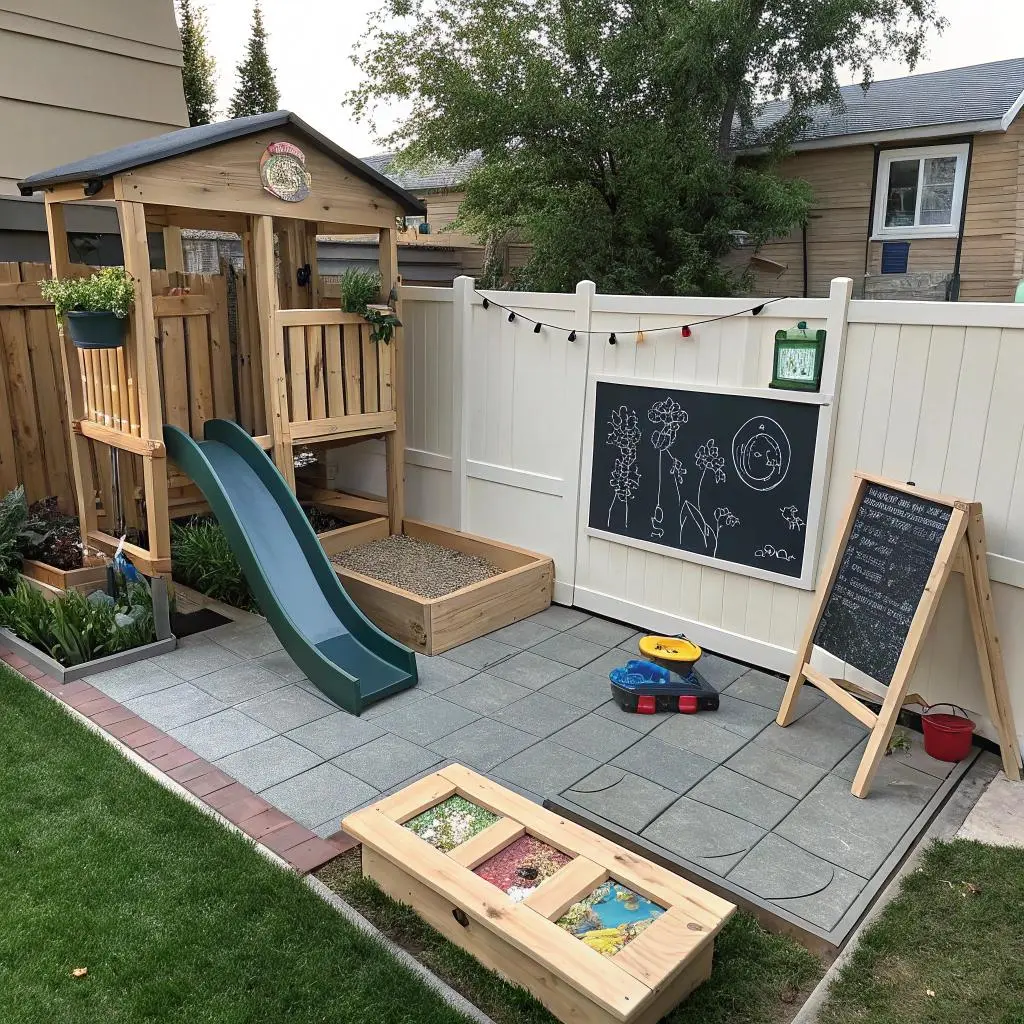
A small backyard can become a fun place for children without expensive playground equipment or a major landscaping project. With a few simple materials, you can create spaces for outdoor art, gardening, water play, imaginative games, and movement.
The best part is that many of these ideas can fit into a small patio, narrow yard, or unused corner. You can also adapt them as your children grow or change the activities whenever they need something new to explore.
Whether you want a simple weekend DIY project or an affordable way to encourage more outdoor play, these small backyard ideas for kids offer practical ways to make the most of your available space. If you are looking for more ways to use limited outdoor space, explore these [vertical garden ideas for small spaces] to make better use of your backyard walls and corners.
1. Create a DIY Water Play Station
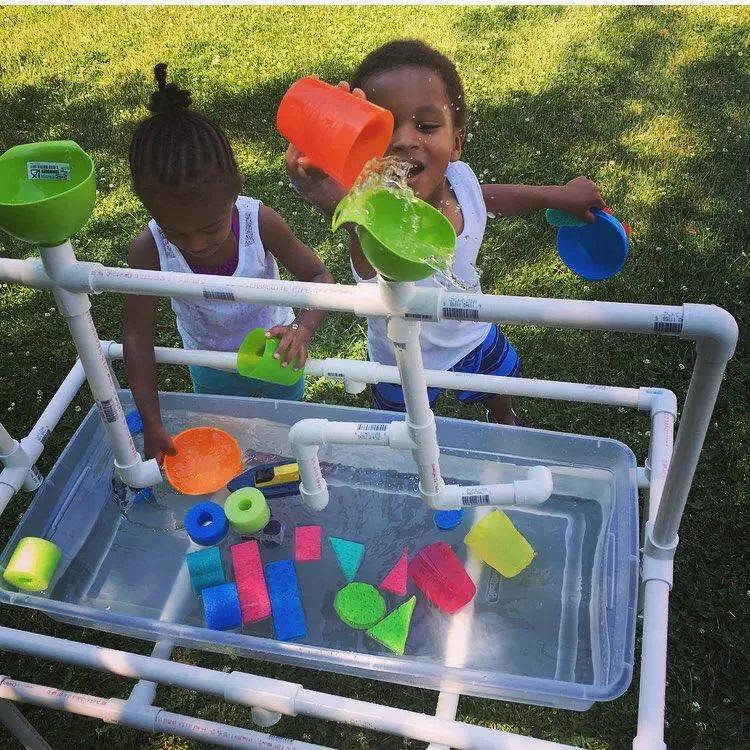
A small water play station can give children a fun outdoor activity without taking up an entire section of the backyard. Instead of installing a large water table, use a shallow, sturdy plastic tray or a purpose-made water play table.
Place it on a level surface where you can supervise the activity easily. Add a few plastic cups, small funnels, measuring containers, and floating bath toys. Children can pour water between containers, watch objects float, and experiment with filling and emptying different shapes.
What You’ll Need:
- A shallow plastic water tray or water table
- Plastic cups and small containers
- Child-safe funnels
- Floating toys
- A stable, level surface
How to Set It Up:
- Choose a flat area close to where an adult can supervise.
- Place the tray on a stable surface at a comfortable height.
- Add a small amount of water.
- Arrange the cups, funnels, and toys nearby.
- Let children experiment with pouring, floating, and transferring water.
Small-Space Tip: Keep the station on a movable outdoor table or tray that can be stored away after playtime.
Estimated Cost: Low if you already have suitable containers.
Safety Note: Water play requires continuous, close adult supervision. Even shallow water can be dangerous for young children. Never leave a filled container unattended, and empty it immediately after use. See the American Academy of Pediatrics’ water safety guidance.
2. Build a Simple DIY Mud Kitchen
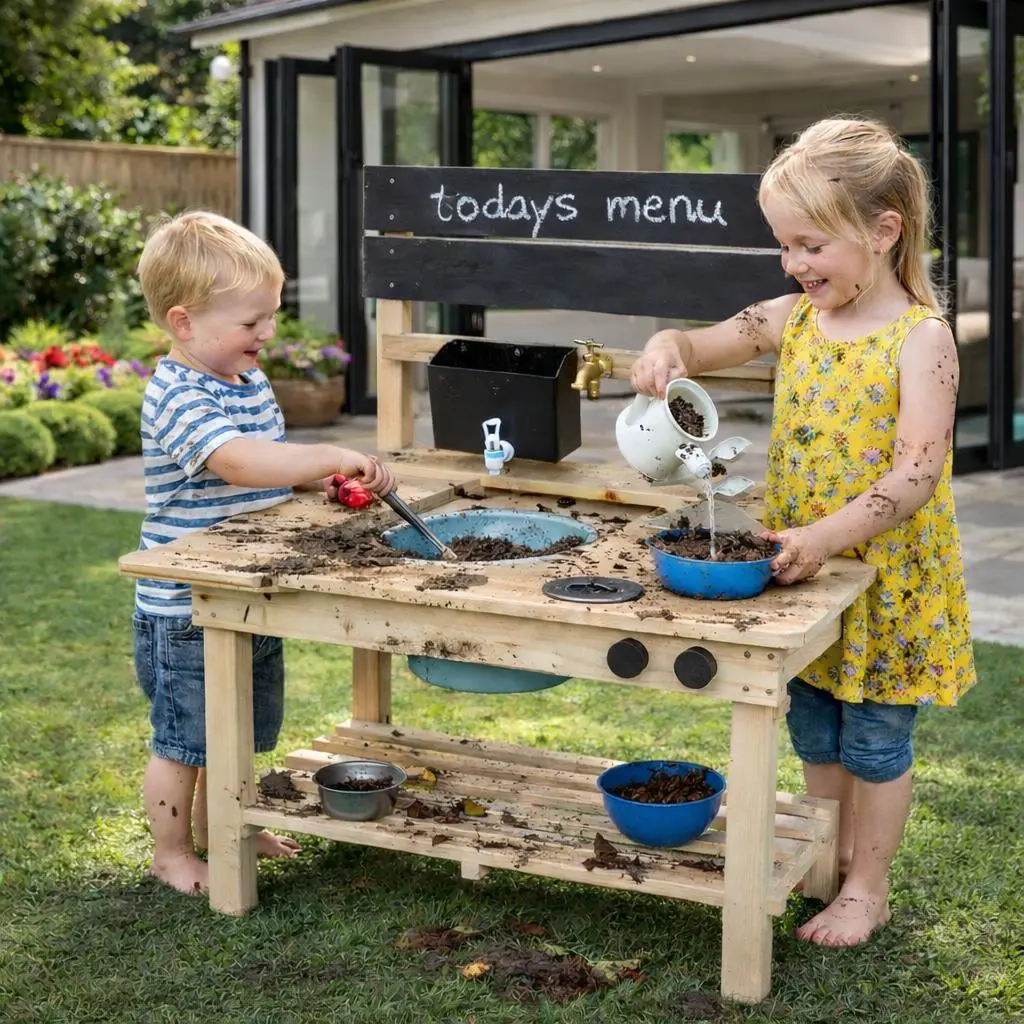
A mud kitchen gives children a place to pretend they are preparing meals, mixing ingredients, and running their own little outdoor restaurant. It can be made from a small secondhand table or sturdy outdoor furniture instead of a large wooden play structure.
Choose a spot where a little dirt and water will not cause a problem. Add a few old pots, stainless-steel bowls, wooden spoons, and small containers. A shallow tub of clean soil can provide the material children need for mixing and pretend cooking.
What You’ll Need:
- A small, stable table or bench
- Old pots and bowls
- Wooden spoons and measuring cups
- A shallow container of clean soil
- A small storage basket
How to Set It Up:
- Clean the table and check that it is stable.
- Arrange the bowls and cooking utensils on the surface.
- Place the soil container underneath or beside the table.
- Add a small amount of water when the activity begins.
- Keep the utensils organized so children can use them again.
Small-Space Tip: Use a narrow table against a suitable fence or wall, leaving enough room for children to stand and move safely.
Estimated Cost: Low, especially when reusing old furniture and household utensils.
Safety Note: Use clean soil and age-appropriate utensils. Keep sharp kitchen tools, cleaning products, fertilizers, and pesticides out of reach. Encourage children to wash their hands after playing with soil.
The National Wildlife Federation’s Nature Play at Home ideas include simple earth and mud play activities that can work even on small patios and decks.
3. Add an Outdoor Chalkboard Wall
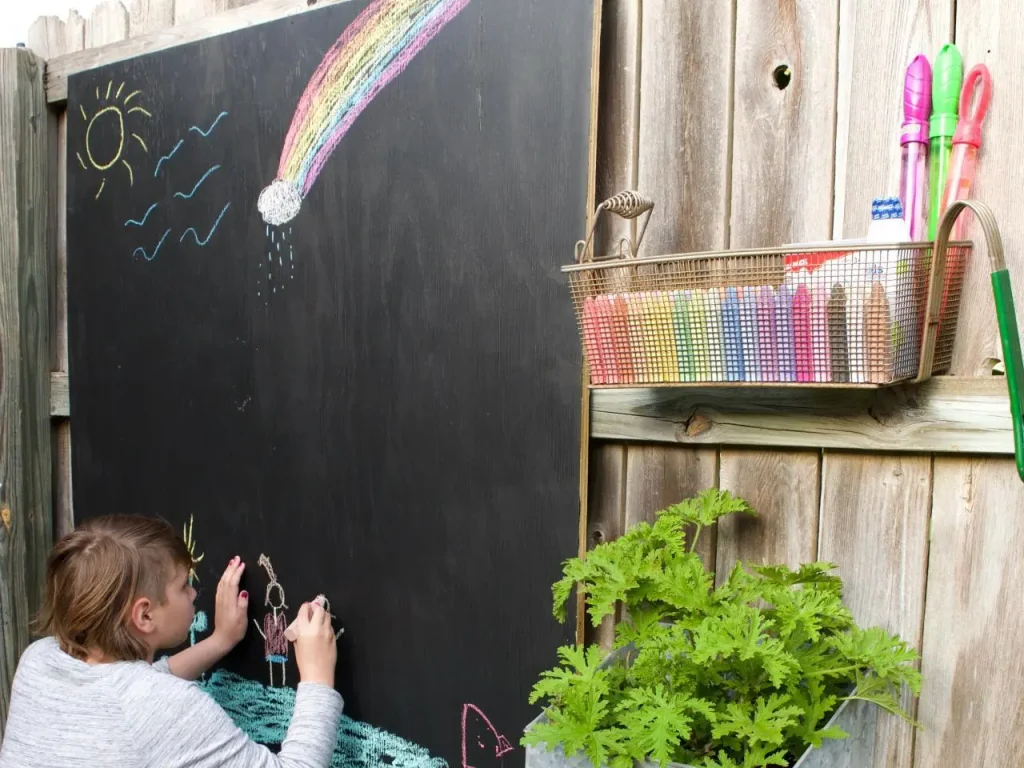
An outdoor chalkboard creates a dedicated place for drawing, writing, and creative games without using valuable ground space. It is especially useful for narrow backyards where there is not enough room for a separate activity table.
You can use an outdoor-rated chalkboard panel or a suitable weather-resistant chalkboard surface attached securely to an appropriate fence or wall.
What You’ll Need:
- An outdoor-rated chalkboard panel
- Suitable mounting hardware
- Sidewalk chalk
- A small basket for supplies
- A cloth or eraser
How to Set It Up:
- Choose a smooth, suitable wall or fence.
- Select a board with rounded or protected edges.
- Securely install it at a height children can reach.
- Place chalk and an eraser in a nearby storage basket.
- Leave enough open space in front of the board for drawing.
Small-Space Tip: A vertical chalkboard uses wall space rather than taking up room on the ground.
Estimated Cost: Low to moderate, depending on the board and mounting materials.
Creative Activities to Try:
- Draw animals, flowers, and imaginary landscapes.
- Write the alphabet or practice simple words.
- Create a pretend restaurant menu.
- Play simple drawing and guessing games.
Choose age-appropriate chalk and keep small pieces away from children who might put them in their mouths.
4. Start a Mini Container Garden for Kids
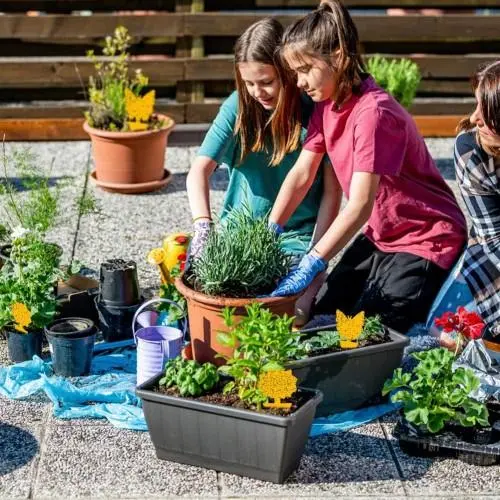
A small container garden gives children their own place to plant seeds, water plants, and watch new growth appear. You do not need a traditional garden bed; a few suitable pots can work on a patio, beside a fence, or in an unused backyard corner.
Let children help choose what to grow. Depending on your local climate and growing conditions, options may include lettuce, radishes, herbs, or compact vegetable varieties. For more inspiration on growing plants in limited spaces, check out these [container gardening ideas] for choosing suitable pots and arranging plants in small outdoor areas.
What You’ll Need:
- Two or three suitable planting containers
- Potting mix
- Seeds or young plants
- A small watering can
- Child-sized gardening tools
How to Set It Up:
- Choose a spot with suitable sunlight for your selected plants.
- Select containers large enough for their roots.
- Make sure the containers have drainage holes.
- Fill them with an appropriate potting mix.
- Let children plant the seeds according to the packet instructions.
- Create a simple watering routine and check the plants regularly.
Small-Space Tip: Arrange containers along a sunny wall or fence, keeping the walking area clear.
Estimated Cost: Low if you reuse suitable containers.
Why It Works: Children can take responsibility for watering and observing their plants. They also get to see how seeds develop into growing plants.
For practical guidance, see the University of Florida’s Gardening with Kids and the University of Arizona Cooperative Extension’s Gardening with Children guide.
Safety Note: Check plant toxicity and potential allergies before planting. Keep fertilizers, pesticides, sharp tools, and treated seeds away from children.
5. Make a Small Outdoor Sensory Play Station
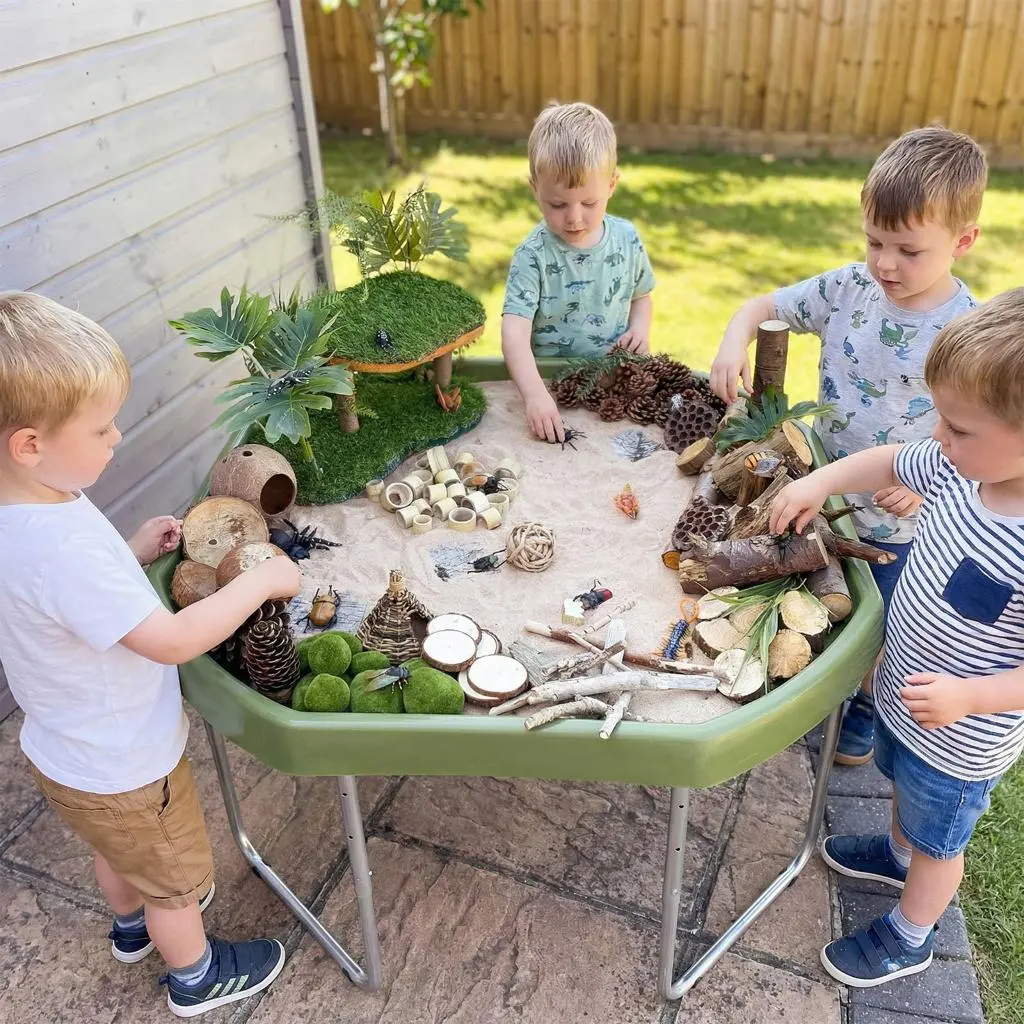
A sensory play station gives children different textures, shapes, and materials to explore. It is a practical option when you want to create an engaging activity without installing permanent backyard equipment.
Use a shallow, sturdy tray or storage container and fill it with age-appropriate materials. Depending on your child’s age, you could include large smooth stones, leaves, pinecones, or scoops for moving materials between containers.
What You’ll Need:
- A shallow storage tray
- Large, age-appropriate natural materials
- Small scoops or measuring cups
- A few sturdy containers
- A washable outdoor mat
How to Set It Up:
- Clean and dry the tray.
- Choose materials that are suitable for your child’s age.
- Arrange the materials in separate sections.
- Add scoops and containers for sorting and transferring.
- Change the materials occasionally to create new activities.
Small-Space Tip: Store the materials in a lidded container when the activity is finished.
Estimated Cost: Low if you use suitable materials already available at home.
Ideas for Sensory Activities:
- Sort leaves by size and shape.
- Compare different natural textures.
- Group objects by color.
- Transfer large objects between containers.
- Create simple nature collections.
Safety Note: Avoid small objects that could cause choking, particularly for young children. Do not use unknown berries, mushrooms, sharp stones, or plant parts that may be toxic. Supervise children throughout the activity.
6. Set Up a Mini Backyard Obstacle Course
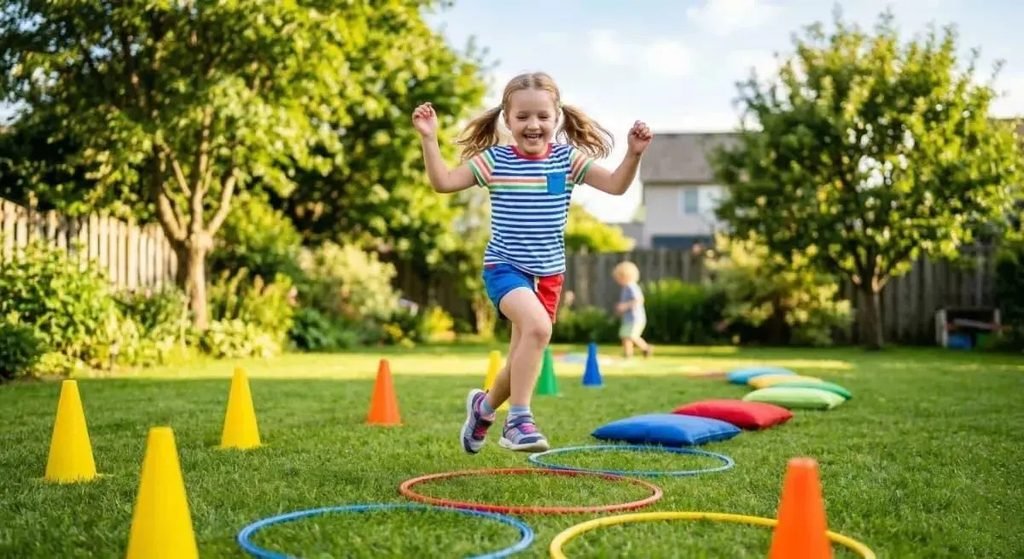
Children do not need a large playground to enjoy movement-based activities. A simple obstacle course made from movable objects can turn a small section of the backyard into an active play area.
Instead of building climbing frames or elevated structures, use ground-level activities that are easy to rearrange.
What You’ll Need:
- Soft, flat floor markers or cones
- Hula hoops
- A lightweight ball
- Chalk
- A clear, level play area
How to Set It Up:
- Clear the area of sharp objects, garden tools, and furniture.
- Place cones or markers to create a simple route.
- Add hoops for stepping or jumping through.
- Draw a few lines for children to follow.
- Include a lightweight ball for a simple target game.
- Rearrange the course to create a different challenge.
Small-Space Tip: Use a short route along one side of the backyard rather than trying to fill the entire space.
Estimated Cost: Low if you already have basic outdoor toys.
Activity Ideas:
- Walk between cones.
- Step through hoops.
- Follow a chalk line.
- Roll a ball toward a target.
- Move between different ground markers.
Safety Note: Keep the course away from walls, steps, sharp edges, and hard obstacles. Use age-appropriate activities and supervise children while they play. Avoid ropes stretched across the course or unstable objects that could tip over.
7. Create a Backyard Nature Discovery Corner
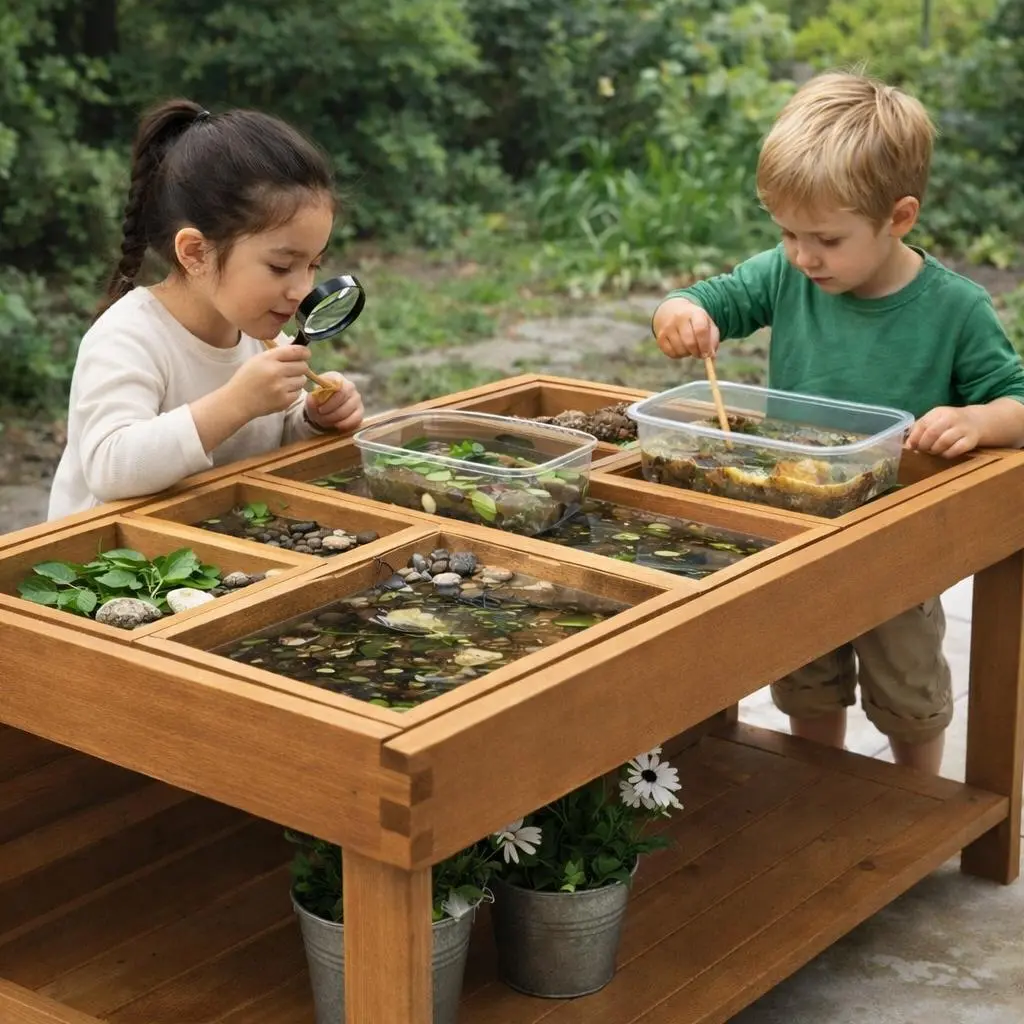
A nature discovery corner gives children a quiet place to observe the outdoor world. It does not need a special structure or expensive equipment. A small section of the backyard with a few containers and a simple observation area is enough to get started.
Use a small outdoor table or a sturdy shelf to hold a magnifying glass, nature notebook, and a few observation materials.
What You’ll Need:
- A small outdoor table or shelf
- A child-friendly magnifying glass
- A notebook and pencils
- A few collection containers
- A simple observation chart
How to Set It Up:
- Choose a quiet corner with some shade.
- Place the table where children can reach it comfortably.
- Add the notebook, magnifying glass, and pencils.
- Encourage children to observe leaves, insects, and other natural features.
- Ask them to draw or describe what they discover.
Small-Space Tip: Use a portable storage box so the entire activity can be packed away after use.
Estimated Cost: Low.
Activities to Try:
- Draw different leaf shapes.
- Look for insects without touching them.
- Observe how shadows change during the day.
- Compare the colors of flowers.
- Record the weather.
Safety Note: Teach children not to touch unknown insects, mushrooms, or plants. Avoid disturbing nests and wildlife, and wash hands after outdoor exploration.
8. Make a Compact Backyard Sand Play Area
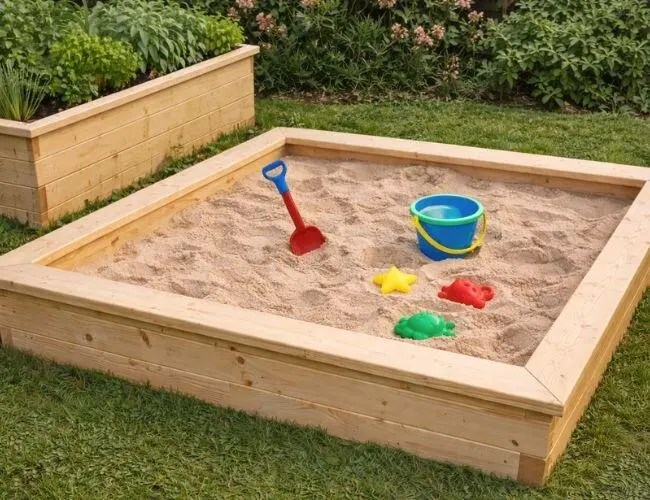
A small sand play area can provide hours of imaginative play without requiring a full-size sandbox. A sturdy, purpose-made sandbox or suitable outdoor play container can fit into an unused corner of a small yard.
Fill it with clean play sand and add a few basic tools for digging and shaping.
What You’ll Need:
- A suitable sandbox or sturdy play container
- Clean play sand
- Small shovels and scoops
- Sand molds
- A fitted cover
How to Set It Up:
- Select a level area away from pathways and garden hazards.
- Choose a container with suitable drainage and construction.
- Fill it with clean play sand.
- Add age-appropriate digging tools and molds.
- Cover the sandbox when it is not being used.
Small-Space Tip: Choose a compact container that can be covered and stored when necessary.
Estimated Cost: Low to moderate, depending on the container and sand.
Play Ideas:
- Build small sandcastles.
- Create pretend roads and landscapes.
- Make shapes using molds.
- Dig and fill small holes.
- Create a miniature construction site.
Safety Note: Keep sand clean, dry it when necessary, and inspect it regularly for animal waste, debris, or sharp objects. Avoid small toys that may be choking hazards.
9. Create a Cozy Outdoor Reading Nook
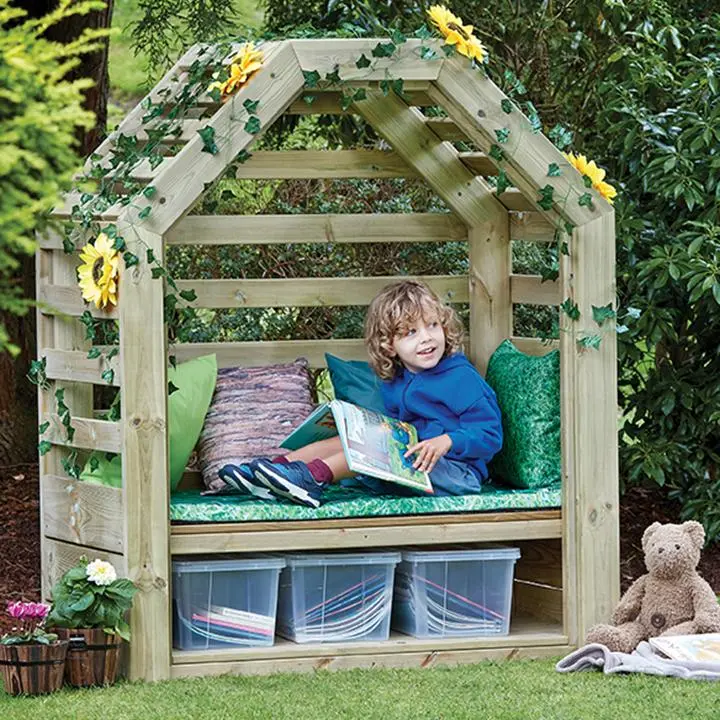
Not every backyard activity needs to involve running, jumping, or making a mess. A small reading nook gives children a comfortable place to enjoy books, look at pictures, or spend a quiet afternoon outdoors.
You can create one with a weather-resistant floor cushion, a small bench, or a suitable outdoor chair.
What You’ll Need:
- A small outdoor bench or comfortable seating
- Weather-resistant cushions
- A small storage basket
- Children’s books
- Shade from an umbrella or suitable covered area
How to Set It Up:
- Find a quiet, relatively shaded corner.
- Place a small bench or suitable seating there.
- Add weather-resistant cushions.
- Keep a basket nearby for books.
- Arrange the area so it remains comfortable and easy to access.
Small-Space Tip: Use a narrow bench against a suitable wall or fence instead of several separate chairs.
Estimated Cost: Low if you reuse existing seating and cushions.
Extra Touch: Let children decorate the reading corner with weather-resistant artwork or a small container of suitable plants.
Check cushions and furniture regularly for moisture, mold, splinters, and loose parts.
10. Build a Mini Fairy Garden
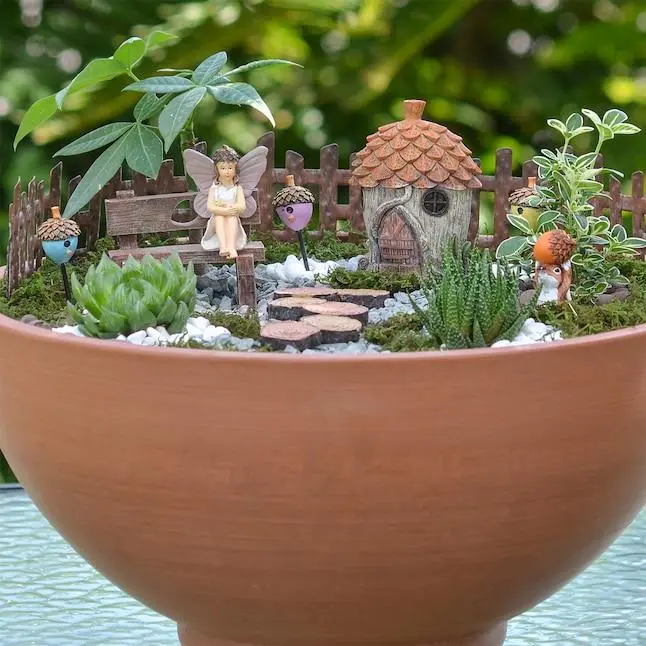
A mini fairy garden is a creative project that can fit inside a large planter or shallow garden container. Children can arrange tiny paths, small decorations, and suitable plants to create an imaginary outdoor world.
It is also easy to change the design whenever children want to create a new scene.
What You’ll Need:
- A wide, shallow planter
- Suitable potting mix
- Small, non-toxic plants
- Smooth decorative stones
- Large, age-appropriate garden decorations
How to Set It Up:
- Choose a stable planter with drainage.
- Add suitable potting mix.
- Arrange a few small plants around the edges.
- Create a path using smooth stones.
- Add larger decorations that are appropriate for your child’s age.
- Water and maintain the plants according to their needs.
Small-Space Tip: Keep the entire garden inside one container that can sit on a sturdy table or low outdoor surface.
Estimated Cost: Low to moderate, depending on the decorations and plants.
Creative Ideas:
- Create a miniature woodland scene.
- Make a tiny garden path.
- Add a small pretend house.
- Arrange different plant textures.
- Change the decorations with the seasons.
Safety Note: Choose non-toxic plants and avoid tiny decorations, sharp objects, and materials that could become choking hazards.
11. Set Up an Outdoor Water Painting Station
If you want an outdoor art activity without paint spills or complicated cleaning, water painting is a simple option.
Children can use clean water and large brushes to create temporary drawings on a suitable outdoor surface. As the water dries, the artwork gradually disappears, making room for something new.
What You’ll Need:
- A small container of water
- Large child-safe paintbrushes
- A washable outdoor surface
- A small outdoor table or tray
How to Set It Up:
- Choose a suitable, clean outdoor surface.
- Fill a small container with a little water.
- Give children large paintbrushes.
- Encourage them to draw shapes, letters, and pictures.
- Let the artwork dry before starting again.
Small-Space Tip: Use an existing patio or suitable paved area rather than creating a separate painting space.
Estimated Cost: Very low.
Creative Activities:
- Paint imaginary flowers.
- Practice writing letters.
- Draw roads and simple shapes.
- Create large patterns.
- Play a drawing-and-guessing game.
Safety Note: Keep water containers under adult supervision and empty them immediately after the activity. Avoid slippery surfaces and use only suitable outdoor areas.
12. Create a DIY Nature Building Station
Children often enjoy using simple materials to make their own creations. A nature building station gives them a dedicated area to arrange, combine, and construct small projects using suitable natural and recycled materials.
You do not need a permanent structure. A small table or outdoor tray can provide enough room for this activity.
What You’ll Need:
- A small outdoor table or tray
- Large clean wooden blocks
- Smooth, large stones
- Suitable cardboard pieces
- Large natural materials such as leaves and pinecones
- A storage box
How to Set It Up:
- Choose a stable table or a clear section of the patio.
- Sort the materials into separate containers.
- Provide large blocks and other suitable building materials.
- Encourage children to create small structures, patterns, or imaginary landscapes.
- Store everything safely when playtime ends.
Small-Space Tip: Use stackable storage boxes and bring out only the materials needed for each activity.
Estimated Cost: Low if you reuse suitable household materials.
Building Challenges to Try:
- Create a small nature house.
- Build a pretend bridge using large blocks.
- Arrange leaves and stones into patterns.
- Design a miniature garden.
- Make a pretend town.
Safety Note: Check all materials for splinters, sharp edges, dirt, and loose pieces. Avoid small items for children who still put objects in their mouths. Do not use unstable structures intended for climbing.
How to Make a Small Backyard More Fun for Kids
You do not need to install all 12 ideas at once. A better approach is to choose activities that match your available space, your children’s interests, and the amount of maintenance you can manage.
Here are a few practical ways to organize your backyard:
Divide the Space Into Small Activity Zones
Instead of creating one large play area, use different corners for different activities. For example, place the container garden near a sunny wall, keep the reading nook in a shaded area, and use a clear section of the patio for movement games.
Choose Activities That Can Be Moved or Stored
Portable trays, small tables, containers, and storage boxes make it easier to change the backyard layout. This is particularly useful when the space also needs to function as a family seating or dining area.
Mix Active and Quiet Activities
A good outdoor space can include both movement and relaxation. Combine an obstacle course with a reading corner, or place a nature discovery station near a small container garden.
Use Vertical Space Carefully
Walls and suitable fences can hold chalkboards, lightweight organizers, or vertical planting containers. This leaves more room on the ground for children to move around.
Keep the Layout Simple
Avoid filling every available corner with toys and furniture. Leave enough open space for walking, playing, and supervising children comfortably.
Small Backyard Safety Tips for Children’s Play Areas
A creative backyard should also be a safe place to play. Before setting up any activity, inspect the area and remove unnecessary hazards.
Keep these points in mind:
- Supervise water activities: Never leave children alone near water, including shallow trays and containers. Empty water containers immediately after use.
- Check the ground: Remove sharp stones, broken objects, exposed roots, and other tripping hazards.
- Choose suitable materials: Use stable furniture, child-appropriate tools, and materials without sharp edges or splinters.
- Avoid unsafe structures: Do not build elevated platforms, climbing frames, or homemade swings without appropriate design, construction, and safety guidance.
- Check plants: Identify plants before allowing children to touch or taste them. Keep toxic plants and garden chemicals out of reach.
- Provide shade: Offer a shaded area and encourage children to drink water during hot weather.
- Keep play equipment maintained: Check for loose parts, damaged surfaces, and other hazards before use.
For more detailed guidance, consult the U.S. Consumer Product Safety Commission’s Outdoor Home Playground Safety Handbook and its Home Playground Safety Checklist.
Final Thoughts
A small backyard can offer plenty of opportunities for children to explore, create, and enjoy time outdoors. You do not need expensive equipment or a complicated landscaping plan to make it useful.
Start with a few simple projects, such as a mud kitchen, container garden, outdoor chalkboard, or nature discovery corner. Choose materials that suit your space, keep safety in mind, and allow children to help shape the activities.
With a little planning, even a small outdoor area can become a welcoming place for creativity, learning, and family fun.
How can I create a play area for kids in a small backyard?
Start by choosing two or three activities that match the available space. A chalkboard wall, container garden, small water play station, or portable obstacle course can provide different experiences without requiring a large playground.
What are the cheapest small backyard ideas for kids?
Water painting, chalkboard activities, nature discovery, and simple DIY sensory stations can be inexpensive because they use basic household materials. Reusing suitable containers and furniture can also help reduce costs.
How do I make a small backyard fun without playground equipment?
Focus on activities that encourage creativity and exploration. Children can enjoy gardening, drawing, nature observation, pretend cooking, and simple movement games without needing a large play structure.