Container Gardening for Beginners: What to Plant and When
Table of Contents
Watching an expensive tomato seedling wilt within a week is a fast way to decide container gardening “just isn’t for you.” Most first attempts run into the same handful of fixable problems, and once you know what they are, growing in pots gets a lot more forgiving.
What Is Container Gardening, and Who Is It Best For?
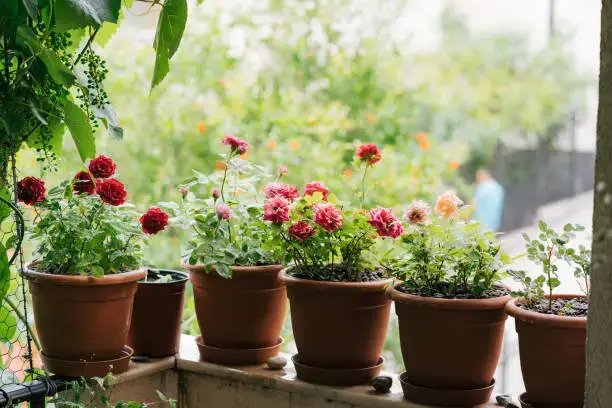
Container gardening means growing plants in pots or other containers instead of planting them directly in the ground. It’s especially useful for renters, apartment dwellers, and anyone with a small patio, balcony, porch, or yard without suitable garden soil.
You can grow much more than flowers in containers. Vegetables, herbs, and ornamentals can all work well when the container, growing medium, sunlight, and watering routine match the plant’s needs.
It’s worth setting realistic expectations from the start. Container gardening can produce a surprising amount of food and flowers in a small footprint, but containers generally need closer attention to watering than in-ground beds because their growing medium can dry out faster.
Some plants are also simply a poor fit for small containers. Large, sprawling, or very vigorous crops can require more root space and support than a typical patio setup can provide.
What Do You Need to Get Started With Container Gardening?
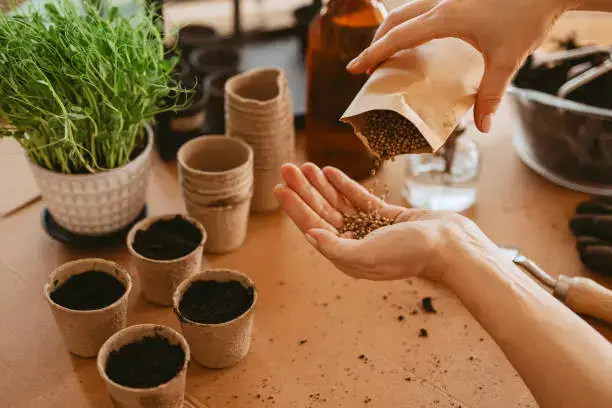
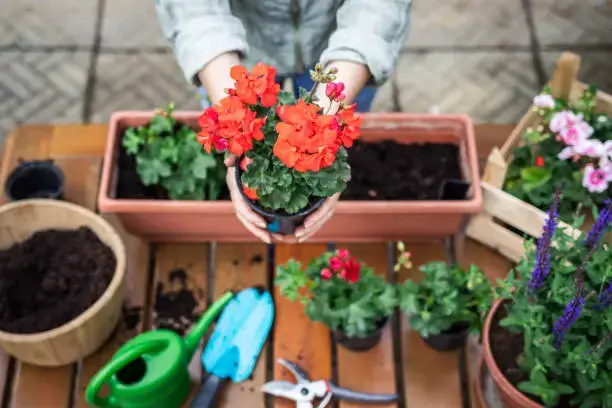
You only need a few basic supplies: containers with drainage holes, quality potting mix, plants or seeds, and simple tools such as a hand trowel and watering can.
Choose your location based on sunlight and accessibility. Many fruiting vegetables and sun-loving flowers need around six or more hours of direct sunlight, while some leafy crops and herbs can tolerate less. Check the requirements for the specific plant rather than assuming every container needs the same amount of sun.
Also think about watering before you put the garden somewhere inconvenient. A sunny corner at the far end of the yard may look ideal, but if carrying water there becomes a chore, keeping up with watering can quickly become difficult.
For container material, plastic and resin pots are convenient starting choices because they’re relatively lightweight and tend to retain moisture better than porous terracotta. Terracotta can still work well, but its porous sides can allow the growing medium to dry more quickly.
For size, bigger is often more forgiving than smaller. Larger containers generally provide more growing medium around the roots and can give you a little more room for error with watering.
Most importantly, make sure every container has adequate drainage. Excess water needs somewhere to escape, because constantly saturated growing medium can deprive roots of the air they need.
What Should You Plant First as a Beginner?
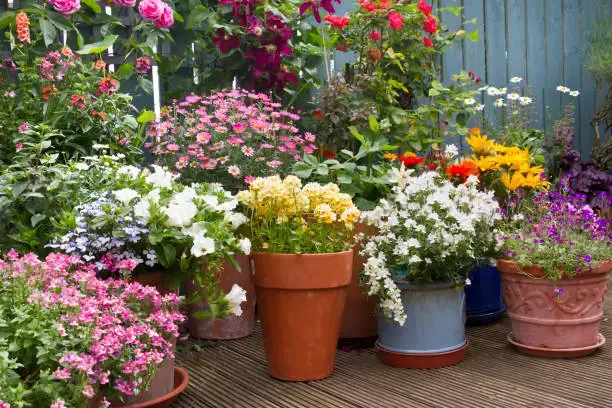
The easiest beginner plants are those that fit your available space and don’t require complicated support or specialized care.
Which vegetables are easiest for beginner container gardening?
Leaf lettuce, radishes, bush beans, and compact cherry tomatoes are useful choices for a first container garden.
Lettuce and radishes are particularly approachable because they don’t require the large containers or support that tomatoes often do. Bush beans can also work well when given enough room.
Tomatoes can be rewarding, but choose a compact or patio variety when possible and give it a sufficiently large container and appropriate support, Illinois Extension specifically recommends cherry and patio tomato varieties like ‘Pixie’ and ‘Patio’ for one-gallon containers, stepping up to a three-gallon container for standard tomato varieties.
Which herbs are easiest for beginners?
Basil, chives, parsley, oregano, and thyme can all be good starting points for a container herb garden.
Keep herbs with similar growing requirements together rather than putting every herb into one pot. Mint is a particularly good candidate for its own container because it can spread aggressively when planted in the ground.
Which flowers are easiest for beginners?
Marigolds, petunias, and geraniums are practical choices for sunny containers and are widely used in container gardening.
The biggest beginner mistake isn’t choosing the wrong plants; it’s choosing too many of them. Two or three easy plants grown well can teach you more about your space than eight demanding plants competing for your attention.
When Should You Plant Different Crops in a Container Garden?
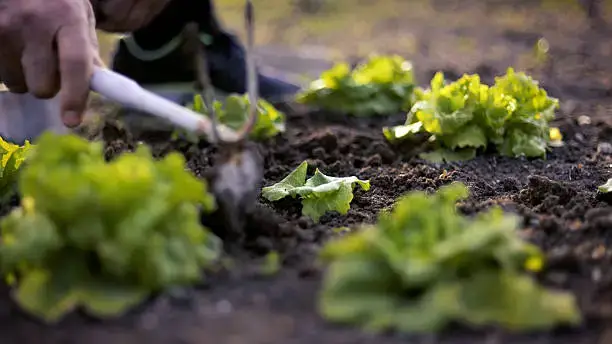
Planting time depends on your region, local frost conditions, and the specific crop, not simply on a generic “spring” or “fall” date.
Cool-season crops such as lettuce, radishes, spinach, kale, and peas generally tolerate cooler conditions better than warm-season crops. Depending on your region, they can be grown in spring and again in fall, although exact timing varies.
Warm-season crops such as tomatoes, peppers, eggplant, cucumbers, beans, and basil are more sensitive to cold. They generally need warmer conditions and should not be planted outdoors while frost or damagingly cold temperatures are still a concern.
This is one of the easiest mistakes to make with container gardening: a plant can be perfectly suited to a pot and still fail because it was planted at the wrong time.
How Do You Use the USDA Plant Hardiness Zone Map?
Use the USDA Plant Hardiness Zone Map to understand the winter temperatures a location typically experiences, but don’t use the zone alone as an exact planting calendar.
The USDA explains that its Plant Hardiness Zone Map is based on the average annual extreme minimum winter temperature over a multi-decade period, dividing locations into 10-degree Fahrenheit zones, with each zone further split into 5-degree “a” and “b” sections. You can enter a ZIP code to find a location’s zone.
The important distinction is that the USDA map is primarily a guide to plant hardiness, especially for perennial plants. It does not tell you the exact date when you should plant every vegetable in spring.
For annual vegetables, also consider local frost dates, current weather, soil or growing-medium temperature, and the crop’s own temperature requirements.
For example, knowing that you’re in Zone 7 does not automatically mean that every tomato should be planted at the beginning of April. Your local last-frost conditions and the tomato variety still matter.
That’s why a better beginner strategy is to use USDA zone + local frost information + crop-specific instructions rather than following a generic “plant in spring” calendar.
How Do You Set Up and Plant a Container Garden Step by Step?
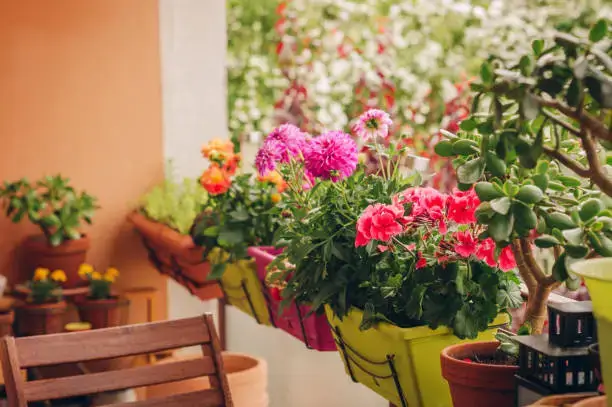
Set up your container garden by matching the pot to the mature plant, using an appropriate potting mix, following planting instructions, and establishing a consistent watering routine.
1. How do you choose the right container?
Choose a container with drainage holes and enough space for the plant’s mature root system.
Don’t size the container only according to the tiny starter plant you see at the nursery. A tomato transplant may look small when you buy it but can eventually require a much larger container.
As one example, Penn State Extension recommends a container at least 20 inches wide for a single tomato plant, while peppers and eggplants can do well in a container around 14 inches wide, and pots should generally be at least as tall as they are wide for healthy root growth. Exact requirements still vary by cultivar and growing conditions.
2. Why should you use potting mix instead of garden soil?
Use a quality potting mix rather than straight garden soil because ordinary garden soil can become too dense in a container and interfere with drainage and root aeration.
Commercial potting mixes are designed specifically for container growing and commonly contain ingredients that balance moisture retention and drainage.
For a first container garden, you don’t need to make your own growing medium. A reputable commercial potting mix is a much simpler starting point.
3. How should you plant seeds or starter plants?
Follow the seed packet or plant tag for planting depth and spacing rather than guessing.
Seed depth varies between crops, and overcrowding can lead to weaker plants competing for light, water, and nutrients.
When transplanting a nursery plant, place the root ball into the container according to the plant’s instructions and water thoroughly afterward.
4. How often should you water container plants?
Check the growing medium regularly and water according to its moisture needs rather than following a rigid daily schedule.
Containers can dry out quickly in hot, sunny weather. so water according to the plant’s moisture needs frequent attention during summer, while others in cooler or shaded conditions may stay moist longer.
When you water, apply enough to moisten the growing medium thoroughly and allow excess water to drain from the bottom.
5. Do container plants need fertilizer?
Many container plants benefit from regular feeding because nutrients can be depleted as plants grow and water moves through the container.
Check whether your potting mix already contains fertilizer and follow the fertilizer label for the appropriate rate and frequency.
More fertilizer isn’t automatically better. Excessive fertilizer can damage plants, so follow the product directions rather than increasing the dose.
What Mistakes Do Beginners Make With Container Gardening?
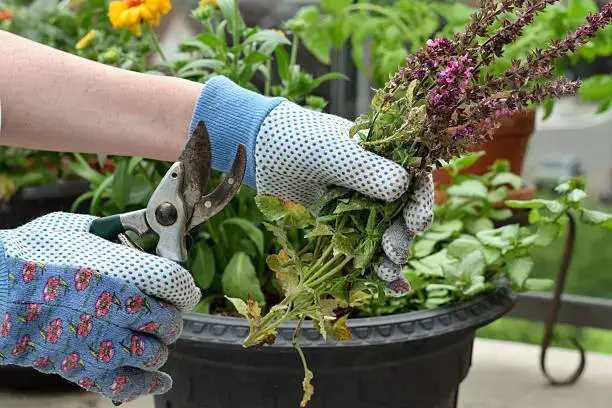
Most beginner problems come down to timing, container size, overcrowding, unsuitable soil, or inconsistent watering.
- Planting too early or too late: Match the crop to local conditions instead of relying on a generic calendar.
- Using garden soil: Straight garden soil can become too heavy and dense in a container.
- Choosing a container that’s too small: A pot should accommodate the plant’s expected mature size.
- Overcrowding plants: Follow the spacing recommendations on the seed packet or plant tag.
- Watering on autopilot: Check the growing medium instead of assuming every container needs water at the same frequency.
One useful beginner habit is to check your containers regularly without automatically watering them. You’ll gradually learn how quickly each pot dries under the particular conditions of your patio, porch, or balcony.
How Much Does It Cost to Start a Beginner Container Garden?
A basic container garden can be inexpensive if you start with a few simple containers, seeds or starter plants, and one suitable bag of potting mix.
Your costs will depend heavily on the size and type of containers you choose and whether you already own basic gardening tools.
A simple setup might include a few basic containers, potting mix, one or two packets of seeds, a small number of starter plants, a hand trowel, and a watering can or hose attachment.
Costs rise when you choose large decorative planters, multiple nursery plants, self-watering containers, trellises, or specialized growing equipment. You also may have seasonal expenses for fertilizer, additional potting mix, replacement plants, or new seeds.
For a first garden, there’s little reason to buy expensive equipment before you know what works in your space. Start with the basics, learn your conditions, then expand.
Should Beginners Start From Seeds or Starter Plants?
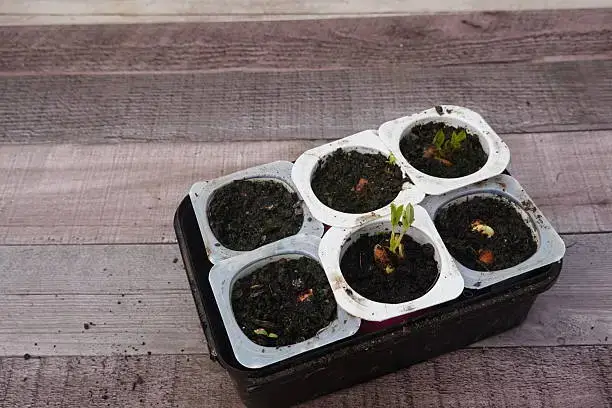
Starter plants can be the simpler option for a first season, while seeds usually offer more variety and can cost less per plant.
Seeds make sense when you want to grow several plants economically or want varieties that aren’t commonly available as nursery starts. They do require more attention during germination and early growth, you’ll need to keep the seeds at the right depth and moisture level and provide suitable conditions until the seedlings are established.
Starter plants let you skip those early stages. They’re particularly convenient for crops such as tomatoes and peppers, where buying a healthy young plant can give you a useful head start.
For a first season, you don’t have to choose only one method. Try one or two starter plants alongside an easy crop from seed, such as lettuce or radishes. That gives you a chance to learn both approaches without making the entire garden dependent on successful seed germination.
How Do You Know What Planting Zone You’re In and Why Does It Matter?
You can find your USDA Plant Hardiness Zone by entering your ZIP code on the official USDA Plant Hardiness Zone Map. The current version replaced an older map and uses 30 years of temperature data, providing both full zones and half zones such as 7a and 7b.
The USDA describes the map as a general guide for growing perennial plants and cautions that other factors, including light, soil moisture, wind, temperature, and local microclimates, also affect plant performance.
This distinction matters for container gardeners because your hardiness zone does not give you an exact vegetable planting date. Instead, use the zone to understand winter hardiness, then use local frost information and the specific crop’s growing requirements to decide when to plant annual vegetables.
For example, a tomato variety may be appropriate for your general climate but still need to wait until cold conditions have passed in spring. A cool-season crop such as lettuce may be ready for planting much earlier.
The common beginner mistake is treating “spring” as one universal planting window. It isn’t. Spring arrives at different times across the U.S., and even within the same hardiness zone, local conditions can vary.
If you’re unsure, check the seed packet or plant tag and look for local guidance from a nearby university Extension service or experienced nursery.
Can you container garden year-round?
Yes, in many parts of the U.S., but the crops you can grow will change with the seasons. Cool-season crops can extend into fall and, in milder areas, sometimes winter. In colder climates, outdoor container gardening is generally more seasonal, and some plants may need protection or to be moved to a suitable sheltered location.
What vegetables should beginners avoid growing in containers?
Beginners may want to avoid crops that require unusually large amounts of space or support. Full-size pumpkins, large vining squash, and some sprawling melons can overwhelm a small container setup. If you want to grow them, look specifically for compact or container-suited varieties.
How do you know when to repot a container plant?
Signs include roots emerging from drainage holes, roots becoming tightly crowded, or growth slowing because the container no longer provides enough room. Before moving a plant, check its expected mature size and choose a new container that gives the roots appropriate additional space.
Starting a container garden doesn’t require a huge collection of pots or years of gardening experience. Choose two or three easy plants, give each one the right amount of sunlight and container space, and pay attention to how quickly the pots dry out.
Once you’ve learned how your particular space behaves, adding more vegetables, herbs, and flowers becomes much easier, and much more enjoyable.