
Fire Pit Ideas for Small Backyards on a Budget
Table of Contents
A small backyard can feel like a real outdoor room with the right fire pit Ideas, but only if you pick one that fits the space and follows the clearance rules where you live. The good news is that several options work in a tight yard, and none of them need a big budget.
This guide covers which types of fire pits suit small spaces, how far one needs to sit from your house, how to set up a cozy area around it, and what to do if your yard simply can’t take a flame.
What Types of Fire Pits Work Best in a Small Backyard?
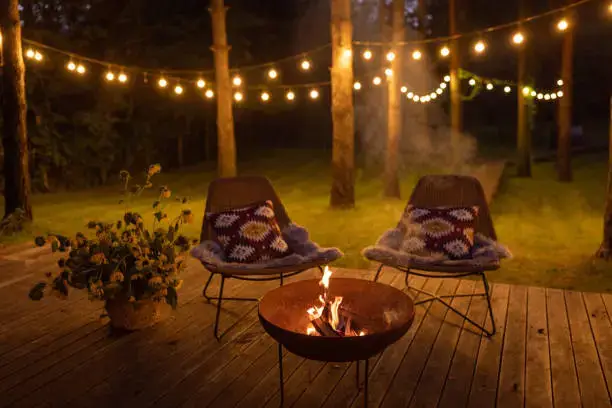
Smokeless wood-burning bowl. A steel bowl with a double-wall design that feeds air into the fire, so the wood burns more completely. It usually puts out noticeably less smoke than an open pit, though not zero. It suits people who want real wood fire in a compact footprint. Cost level: $$.
Propane fire pit or fire table. Fueled by a tank, so there’s no ash and no wood to store, and you turn it on and off at the push of a button. The tank needs a place to live, and gas pits are for open-air use only. This is often the easiest fit for a small yard where smoke would bother the neighbors. Cost level: to $.
Chiminea. A tall, narrow clay or metal fireplace with a chimney. It takes up little floor space and contains the fire better than an open bowl. Cost level: $ to $$.
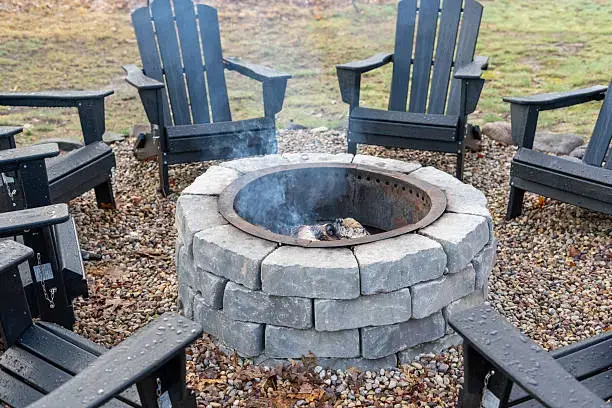
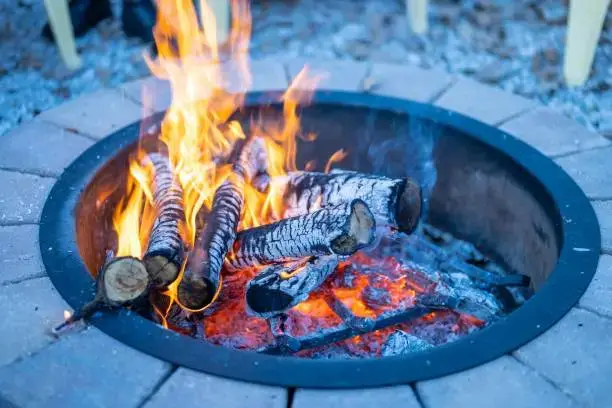
Paver-block ring (DIY). Stackable landscape blocks arranged in a circle, usually sold in kits. It looks permanent and is among the cheapest ways to get a built-in look, but it should sit on a non-combustible base, and you should keep the size modest. Cost level: $ to $$.
Simple portable steel pit. A basic metal bowl or ring on legs. It’s the budget pick and easy to store, which suits renters who may need to move it. It still needs the same clearance and surface as any other fire. Cost level: $.
For a very tight yard, propane or a smokeless bowl is usually the easier choice, and you can skip the fire entirely (see the flame-free ideas below).
How Much Space Does a Fire Pit Ideas Need?
There’s no single nationwide distance, because local rules differ, and the published numbers prove it.
- The U.S. Fire Administration advises using fire pits at least 10 feet away from your home or anything that can burn, and recommends a metal screen over wood-burning fires to keep sparks from floating out.
- The Seattle Fire Department sets the minimum at 5 feet from your home, vegetation, or anything combustible, and caps the fire at 3 feet in diameter and 2 feet in height.
- The village of Homer Glen, Illinois asks for 15 feet from structures, and says not to place a fire pit under trees or other overhead structures.
Some places set the bar at 5 feet, others at 15, so your town’s rule (and your pit’s manual) is the one that counts. Use the numbers above as a way to judge whether your yard is realistic.
A quick two-minute space test:
- Measure from where the pit would sit to the nearest house wall, fence, shed, and overhanging branch.
- If you can’t clear 10 feet from everything that can burn, check your local rule before buying anything with a flame. In some towns it will be 15.
- Add room for seating a few feet back from the fire.
If the numbers don’t work, a flame-free setup gets you most of the cozy feel with no clearance problem.
What Should the Fire Pit Sit On?
Put portable fire pits on a non-combustible surface. Seattle’s fire department lists patio blocks or concrete as suitable and says not to set them up on a wood deck or on grass. If you only have a deck, a flame-free design or a manufacturer-approved base is the safer route.
How Do You Set Up a Small Fire Pit Area on a Budget?
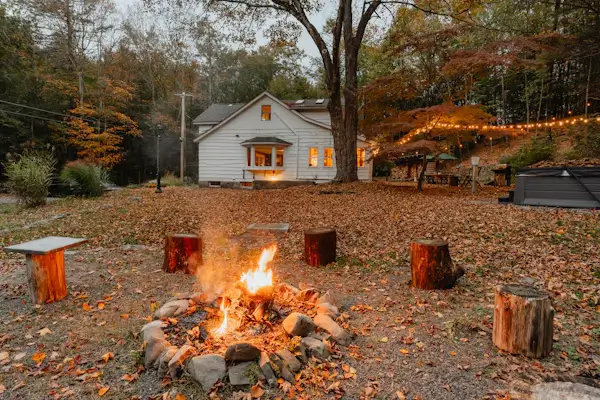
Start with a sketch. Draw the yard with the door, fence, plants, and walkways, then mark the pit location from your space test. Whatever space is left over is where seating goes.
Keep the furniture small. Two compact chairs and a side table beat a full sectional in a small yard. A narrow bench works well along a fence, as long as it sits well outside the clearance zone.
Define the area with paving or pavers. You don’t have to pave the whole yard. A modest patio of pavers or concrete slabs under and around the pit gives the fire a safe base and makes the spot feel intentional.
Light the evening, not just the fire. Outdoor-rated LED lanterns and solar string lights add warmth and keep walkways visible. Run cords so nobody trips on them.
Soften the edges with plants. Potted herbs and flowers around the seating area make a hard patio feel less bare, as long as they stay outside the clearance zone. If you’re new to pots, our beginner guide to container gardening covers what to plant and when.
What Safety Basics Should You Follow?
Most fire pit problems come from a few skipped basics.
- Never leave it unattended. Per the Seattle Fire Department, an adult should stay with the fire until it’s completely out, and it recommends a 3-foot safety zone for children and pets.
- Use a spark screen on wood fires. Homer Glen’s guidance also recommends a screen to contain sparks and embers.
- Keep extinguishing gear within reach. Seattle lists a shovel and two buckets of water, a charged garden hose, or a 4-A rated fire extinguisher. Homer Glen mentions a hose, extinguisher, or bucket of sand.
- Burn only what’s allowed. Use clean, dry wood. Skip lighter fluid and other accelerants, and don’t burn trash or building materials.
- Put it out before you leave the yard. Cool ashes can go in a metal can with a lid, kept away from anything that burns.
- Check for burn bans and air-quality alerts. Wood fires are often restricted on high-risk days, so check your local fire department before lighting.
How Much Does a Budget Fire Pit Setup Cost?
Prices change a lot by brand and region, so check current listings before you plan. Here’s how the tiers compare.
| Setup | What’s usually included | Cost level |
|---|---|---|
| Flame-free refresh | Compact seating, LED lanterns, string lights, a couple of planters | $ |
| Portable pit starter | Simple steel pit or chiminea, spark screen, extinguishing gear, a small pavers pad | $$ |
| Propane or smokeless upgrade | Fire table or smokeless bowl, cover, seating, lighting | to $ |
| Built-in project | Paver ring or permanent gas feature, new patio base | $$$ and up |
A permanent gas installation can involve professional work and local permits, so get a quote rather than guessing.
What Should You Buy First?
If you’re building your setup in stages, this order protects the budget:
- The fire pit itself, sized to fit your clearance numbers
- A spark screen (for wood-burning pits)
- Fire extinguishing gear (a bucket and shovel, a hose, or a 4-A rated extinguisher)
- A weatherproof cover to extend the life of the pit
- Outdoor-rated LED lanterns and solar string lights
- Compact chairs and a side table
- A propane tank cover or stand, if you chose gas
Wood-Burning or Propane for a Small Yard?
In a tight space, propane or a smokeless bowl is usually the easier fit, because there’s less smoke drifting toward windows and neighbors and no ash to clean up. Pick a traditional wood pit if you love the crackle and smell of a real fire and your yard has generous clearance and understanding neighbors.
| Factor | Wood-burning | Propane |
|---|---|---|
| Atmosphere | Crackle, smoke smell, real flame | Cleaner, steadier flame |
| Smoke and ash | Both, to varying degrees | Little smoke, no ash |
| Setup | Wood storage, spark screen | Tank storage, cover |
| Best for | Roomy yards, wood-fire fans | Tight yards, quick evenings |
Gas pits aren’t exempt from local rules or burn restrictions, so check before assuming they’re allowed.
What Mistakes Do People Make With Small Fire Pit Areas?
- Buying before measuring. A pit that fits the photo may not fit your 10-foot (or 15-foot) clearance.
- Placing it under a tree, pergola, or overhang. Sparks can ignite what’s above.
- Using a deck or grass as the base. Choose a non-combustible surface.
- Squeezing in too much seating. Cramped chairs make the pit crowded and leave no safe space.
- Skipping the screen on wood fires. Sparks travel further than people expect.
- Ignoring the neighbors. Smoke and light carry in a small yard.
Final Thoughts
Start with the measuring tape, not the shopping cart. If your yard clears the distance your local rules require, a smokeless bowl or a propane pit is the easiest way to get a cozy fire in a small space, and a paver ring is the budget route to a built-in look. If it doesn’t clear, a good set of lanterns, string lights, and two comfortable chairs will give you a gathering spot you’ll use all season.
What is the best fire pit for a small backyard?
For most tight spaces, a propane fire pit or a smokeless bowl is the easiest fit, since both reduce smoke. The best choice still depends on your clearance numbers and local rules.
Can you put a fire pit on a balcony?
Many leases and building rules prohibit open flames on balconies, so check yours and get written permission before considering one. If permission isn’t clear, use LED lanterns and string lights for a similar mood.
Is a DIY fire pit cheaper?
A paver-block ring kit can be one of the least expensive ways to get a built-in look, but it must sit on a non-combustible base and meet the same clearance and size rules as any other fire.